Business Accelerator
From military leadership to venture capital, Dustin Dunbar ’09 draws on experience to invest in the next generation of startups
June 10, 2026
By
Jeremy Norman
Photo By
Timothy D. Sofranko
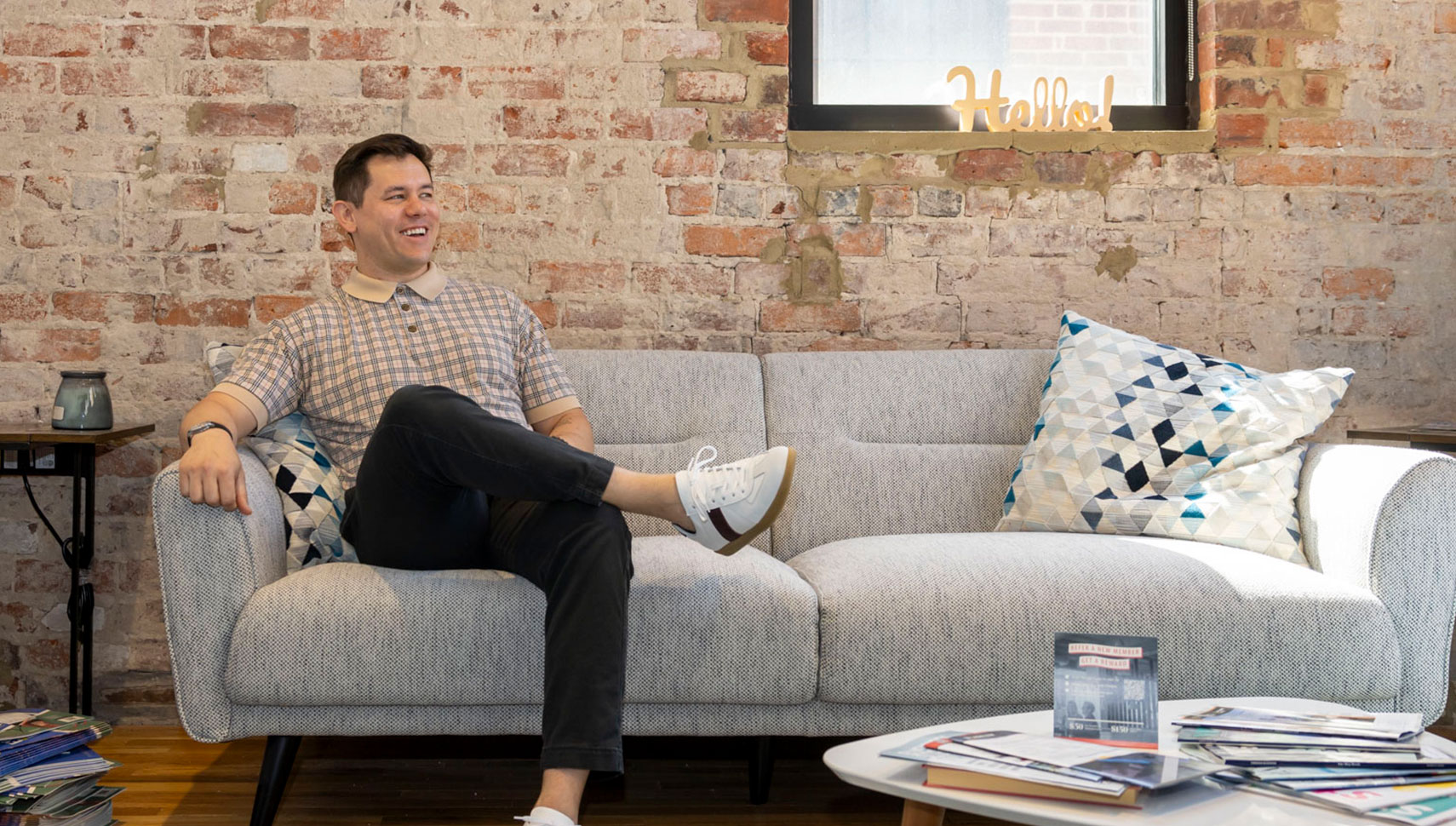
Dustin Dunbar ’09 can trace his connection to William & Mary back to a third-grade field trip.
Growing up in a military family, he moved often. His parents were both Air Force officers, and by the time he was in elementary school, he was living in Northern Virginia. A school trip to Williamsburg left an impression on Dunbar.
“I absolutely fell in love with Williamsburg,” he says. An elementary school teacher who accompanied Dunbar on the trip — Renee Kriz Brodnik ’94 — made the university feel even more personal. “She was one of the foundational people in my life at a very young age.”
Even as his family moved to Oklahoma and later Texas, the idea of William & Mary stayed with him. However, his path to the university was anything but direct.
After high school, Dunbar attended the U.S. Naval Academy, influenced in part by his goal of becoming a Marine. When things did not go as planned, he left and enrolled at McKendree University in Illinois. Dunbar focused on his academics, determined to earn another opportunity.
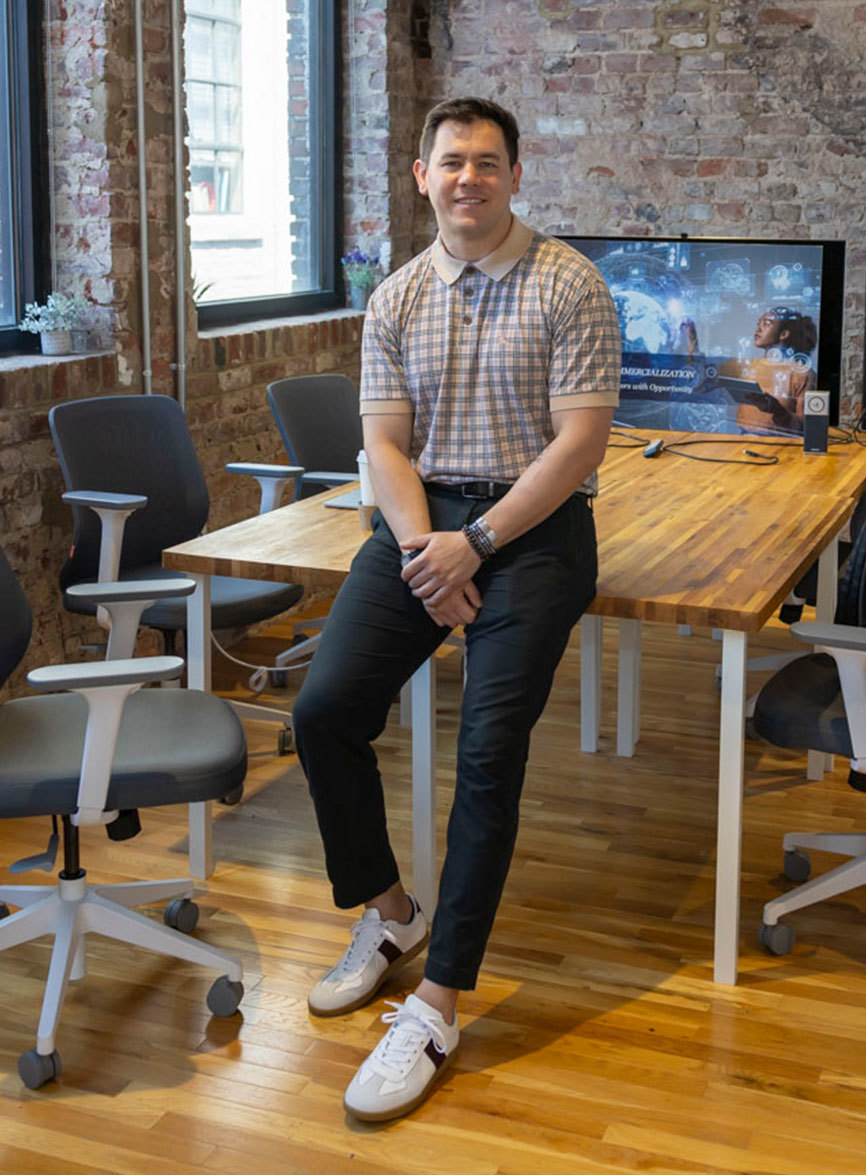
William & Mary was now his goal. When he visited again, he found himself remembering details from that first trip and earlier tours. “It just reintroduced me to my love for Williamsburg,” he says.
He applied, was accepted and finally made it back to what he calls his “first love.”
At William & Mary, Dunbar studied marketing at the Raymond A. Mason School of Business, drawn to the field because it combined creativity with data and decision-making.
“I was always fascinated by advertising,” he says. “I wanted to understand how companies decide who they’re going to sell to and how they’re going to do it.”
At the same time, he was a member of the ROTC. Dunbar’s original plan was to enter the Army Reserve after graduation while pursuing a civilian career. However, as the job market tightened during the 2007—08 financial crisis and the military expanded its need for active-duty officers, that plan changed.
“I just kind of felt the call,” he says.
Dunbar transitioned to active duty in the U.S. Army in 2010. Over the next several years, he served in Germany with the 173rd Airborne Brigade and later at Fort Campbell with the 101st Airborne Division, completing three deployments to Afghanistan.
His military experience shaped how he approaches leadership and problem-solving.
In the Army, responsibility comes quickly. At 24, he was leading about 50 soldiers. By 30, he was directing around 100 people across multiple locations.
“You are thrown into leadership positions at a very young age,” he says. “You learn how to run an organization and how to build a culture.”
He also learned to question assumptions and prioritize turning ideas into results. It was not enough to believe something would work; Dunbar had to understand how it would work and what would happen if it did not.
“That operator lens really stuck with me,” he says.
After leaving the military in 2018, Dunbar and his wife decided to settle in Richmond, Virginia. He pursued a master’s degree in finance and began looking for opportunities. However, breaking into the field was challenging.
His William & Mary network made a difference.
At a “Breakfast, Bagels and Business Cards” alumni event, he met James “Jim” Ukrop ’60, L.H.D. ’99, P ’85, G ’25, who, inspired by Dunbar’s service, encouraged him to share his résumé. That connection led to interviews and, within a couple of weeks, a job at Capital One.
“The William & Mary network is one of the biggest reasons I have a job,” he says. “I will never forget that.”
At Capital One, he spent two years learning the fundamentals of banking and finance, developing a better understanding of how money moves and how institutions evaluate risk. Over time, he realized he wanted to move closer to the companies themselves.
That interest led him to venture capital.
Dunbar, who now serves as senior investment associate at Virginia Venture Partners, was drawn to the long-term relationships involved in investing and the opportunity to work directly with founders as they build their businesses.
“You’re investing in people,” he says. “And you’re helping them grow over 10 or 12 years.”
His portfolio includes such companies as Electra.Aero (aircraft that take off and land in just 150 feet), Brandefy (duplicates of luxury skin care and fragrance products), Applied Impact Robotics (robots that can operate in crude oil sludge) and Tiga AI (artificial intelligence-driven business-to-business sales tools). Dunbar looks for entrepreneurs with deep knowledge of their field and a clear understanding of their customers. Strong ideas matter, but so does knowing how to bring those ideas to market and scale them effectively.
“You need a go-to-market motion that is repeatable and scalable,” Dunbar says. “If you don’t have that, you just have a product and a dream.”
He also encourages founders to stay focused on the problem they are trying to solve, rather than becoming too attached to a single solution.
“The good companies pivot,” he says. “If you’re focused on the problem, you’ll find the best solution.”
Dunbar remains closely connected to William & Mary. He regularly speaks with students and participates in professional development programming, sharing what he has learned along the way.
For him, the motivation is simple.
“It’s about paying it forward,” he says. “People did that for me, and I want to do the same.”
Looking ahead, Dunbar hopes to continue building connections across industries and communities. He wants to help bridge gaps between entrepreneurs, investors and institutions, making it easier for people to access the resources they need.
“I want to be a super connector,” he says. “I want to be someone who can help align all the different pieces.”