Expanding Support
$1.25 million gift will enhance personalized assistance through W&M’s Student Accessibility Services to meet growing demand and help students thrive
October 19, 2026
By
Tina Eshleman
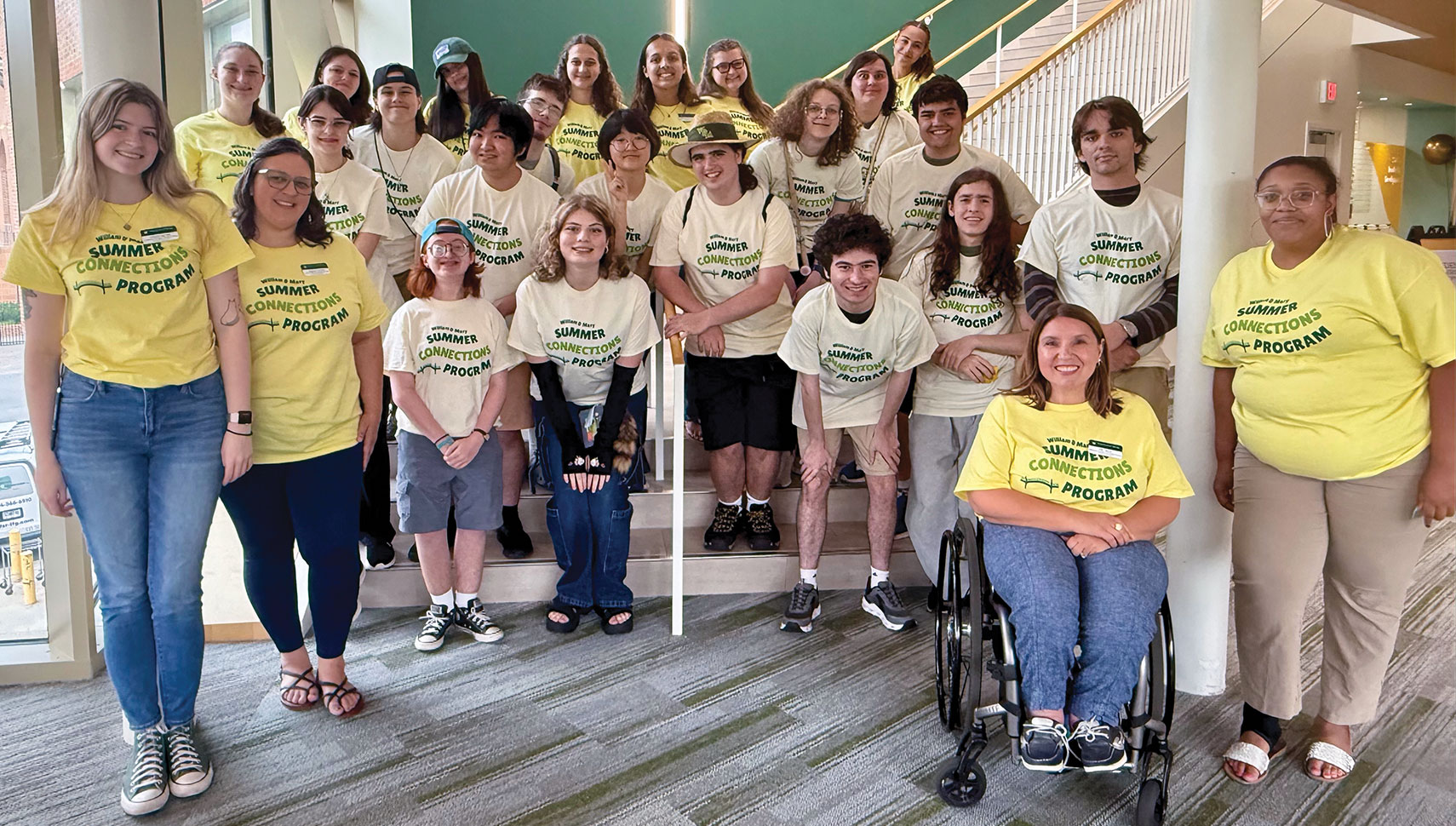
When starting college, many students worry about things like finding their way around campus, making new friends or how they’ll do in their classes. For Bridget Busbice ’30, an added concern was navigating stairs.
Busbice has a type of dysautonomia, a nervous system disorder that affects body functions such as blood pressure and heart rate. Climbing stairs can make her symptoms suddenly worse, so knowing the lay of the land — and locations of elevators and ramps — is especially important.
This past July, she was one of 14 new William & Mary students who participated in Student Affairs’ weeklong preorientation Summer Connections program run by the Office of Student Accessibility Services (SAS) to help ease the transition for students with disabilities.
Begun as a pilot program three years ago with support from the Parents Fund, Summer Connections evolved from the former Neurodiversity Summer Bridge program. Thanks to donor support, there is no charge for the program, which welcomes students with any type of disability.
A recent $1.25 million gift made anonymously from the family of a W&M graduate has established the Student Accessibility Services Fund, an endowment that supports the most pressing needs of SAS. This fund will provide resources both to expand Summer Connections to accommodate more incoming students and to follow up with them throughout their time at William & Mary. The goal is to ensure that students can understand how to access the resources and support they need for academic success and career preparation.
Beginning this fall, the new investment is funding a position for a graduate student from the School of Education’s counseling program, Mauli Whitney, to work with Student Accessibility Services to design, implement and assess a four-year curriculum for students with disabilities. This will include workshops and activities related to self-advocacy and academic progression, as well as connecting with career services and transitioning to a job or graduate school.
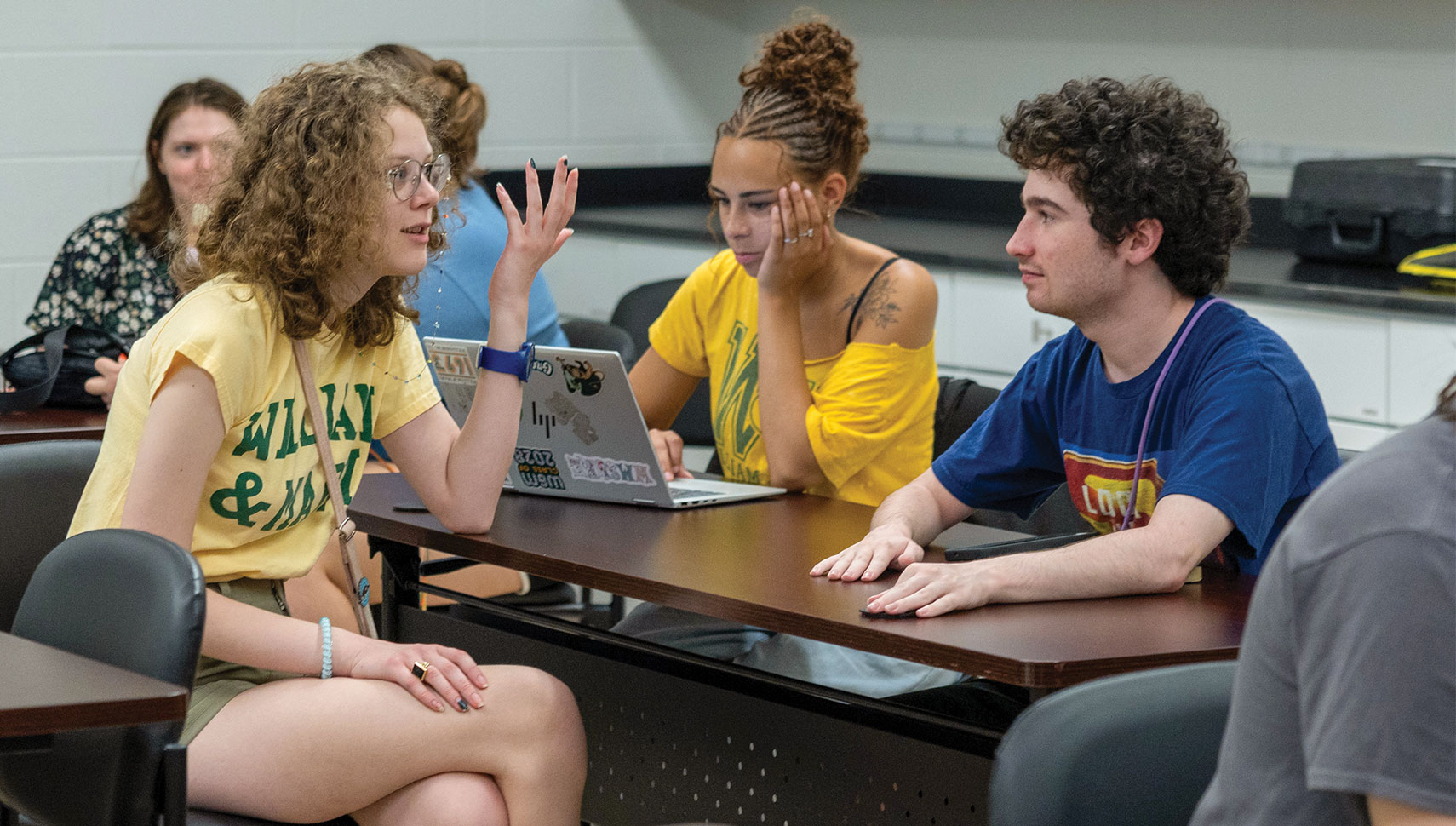
Photo: Katie Warner
“At William & Mary, every student should have the opportunity to fully engage in the academic, social and personal experiences that define the university,” says Wilmarie Rodriguez Ed.D. ’21, assistant vice president for student success. “By expanding Summer Connections into a sustained student success initiative, SAS will help students build the skills and confidence they need to navigate college life independently.”
The gift comes at a time when the need for accessibility services is growing at colleges and universities nationwide, as diagnoses for conditions such as autism, attention-deficit/hyperactivity disorder and severe anxiety have increased. Between 2017 and 2025, the number of undergraduate and graduate students at W&M seeking accommodations rose by 341%, Rodriguez says.
That growth “reflects both increasing student need and a campus culture where seeking support is recognized as a strength,” she says. “Our responsibility is to meet students where they are today and to anticipate where they want to go and provide the tools, confidence and community that help them get there.”
SAS supports students through services such as a specialized academic testing center, housing and meal plan accommodations, shuttle services for those with limited mobility and individual appointments with staff who connect students with campus resources. By establishing the Student Accessibility Services Fund, the donors hope to encourage others to join them in supporting enhanced services to meet evolving needs. During the 2025–2026 academic year, SAS served 2,207 students with accommodations.
In this year’s Summer Connections program, incoming students attended a mock lecture on human immunity. They learned about wellness and recreation programs and resources available to them. They stayed in residence buildings and ate meals in the dining hall. Participants met other first-year and transfer students, as well as W&M faculty and staff and returning students who served as mentors.
One of those mentors was Alexa Silverstein ’29, who had participated in Summer Connections as a new student the previous summer and met some of her closest friends through the program. Through them, she became involved in the Student Accessibility and Disability Alliance (SADA) and now serves as the organization’s vice president. She says it was also reassuring to know some of the professional staff who could help her when things got tough.
“I had a lot of medical issues in the first semester,” she says. “It was amazing to have had conversations with these people and to be able to go to them and say, ‘Hey, we’ve met before, you know who I am, I know who you are. I need help.’”
Busbice says she benefited from interacting with Silverstein and other mentors, including Jamie Plumeri ’27, who participated in the previous year’s Summer Connections as a transfer student.
“I got to hear their perspectives, which not only helps me learn about other people, but it also means that if I have anxiety about what something is going to be like as a freshman, I can talk to someone who’s lived it,” Busbice says. “Not only do these people genuinely care about me and I can go to them when I need something, but they’re also super cool people who I really want to keep in touch with.”