Meeting Legal Needs
W&M’s new Community Law Clinic serves region’s low-income residents
June 10, 2026
By
Emily Webb
When Hampton Roads resident JR* received an eviction notice from the owner of the mobile home park where he has rented a lot for the past four years, he knew he needed to fight back.
JR, a husband, father of two and military veteran, had never missed a rental payment. Instead, he believed that the eviction notice was retaliation for his family’s complaints about the landlord’s mismanagement of the property. Other residents were too afraid to speak up, JR said, but “the park owner didn’t scare me.”
JR searched far and wide for legal help, but he couldn’t afford the thousands of dollars private attorneys estimated it would take to fight the eviction. That’s where William & Mary’s newest law clinic stepped in.
The Community Law Clinic launched in fall 2025 under the direction of Clinical Assistant Professor of Law Tyler E. Dougherty. The funding for the clinic came from W&M Law School alumna Amy Rollins Kreisler J.D. ’95 and her husband, Dr. Nevin Kreisler, as well as the Virginia General Assembly. The clinic provides holistic legal representation to low-income community members and, along with W&M Law School’s seven other law clinics, forms a public-interest law firm where students represent clients under the supervision of licensed attorneys.
Each clinic specializes in a different area to address unmet legal needs in the community. The other seven clinics are the Appellate and Supreme Court Clinic, Domestic Violence Clinic, Federal Tax Clinic, Immigration Clinic, Innocence Project Clinic, Puller Veterans Benefits Clinic and Special Education Advocacy Clinic.
Different from the law school’s other clinical offerings, the Community Law Clinic gives law students with their third-year practice certificates the opportunity to regularly represent clients in state court proceedings. Based on local needs, the clinic represents clients on a wide range of housing, consumer, reentry and family law matters.
Amy Kreisler, whose gift made the clinic’s opening possible, says, “I was interested in supporting the Community Law Clinic so those in the community who might not otherwise be able to afford legal advice or counsel could receive assistance. The added benefit is that it helps the school’s law students receive hands-on experience and understand the real-world impact of their work. I hope the clinic makes a tangible impact in Williamsburg and surrounding areas, and reinforces the school’s broader mission of preparing skilled, thoughtful and service-oriented lawyers.”
Before finding the clinic, JR appeared at his first eviction court hearing without an attorney. He quickly realized that going forward without an attorney could put his family in danger of losing their home. After an acquaintance put him in touch with Dougherty, JR learned that the Community Law Clinic would represent him at no cost.
“Once I was represented by the clinic, everything started going our way,” he says.
Community Law Clinic students worked alongside Dougherty to gather evidence, formulate statutory arguments and prepare witnesses to testify in court. After a successful defense by the clinic team, the court found that the landlord had failed to prove JR and his family had violated the terms of their lease. The judge ruled in JR’s favor, and his family remained in their home without further harassment.
The law clinic “was magnificent,” JR says. “They did such a great job keeping me in my place.”
Like many areas of the country, Hampton Roads has a large “justice gap,” meaning the free legal services available in the area are insufficient to meet the civil legal needs of low- and moderate-income residents, according to the Virginia State Bar. Without expert advice, many Virginians struggle to assert their rights and feel alone when facing complex systems.
“The barrier to justice is very, very real,” says Aja Robinson J.D. ’26, who worked with the clinic before graduating this spring. “Sitting in landlord-tenant court for half an hour, you can easily see 20 evictions of unrepresented tenants. There’s no way to know whether the tenants could have won their case, because there is no advocate there to help tenants tell their side of the story.”
The new Community Law Clinic offers students their first opportunity to act as lead counsel on important legal matters, while helping those most disadvantaged by the justice gap learn to advocate for themselves. Under Dougherty’s supervision, students are responsible for building a relationship with their clients, crafting legal arguments and making strategic decisions.
Second-year law student Breanca White ’21, who grew up in Norfolk, was surprised and inspired by how much she loved the community-oriented work.
“We produce a lot of great lawyers, but at the core of William & Mary Law is the idea of the citizen lawyer,” White says. “Being a citizen lawyer means being on the ground, helping people.”
White, who plans to practice at a law firm in Richmond after graduation, says that she hopes to bring the lessons she has learned about collaborating with economically disadvantaged groups to her future pro bono work. “It’s only right that I give back to the community that made me who I am today.”
*Editor’s note: JR is identified by a pseudonym for privacy reasons.
 |
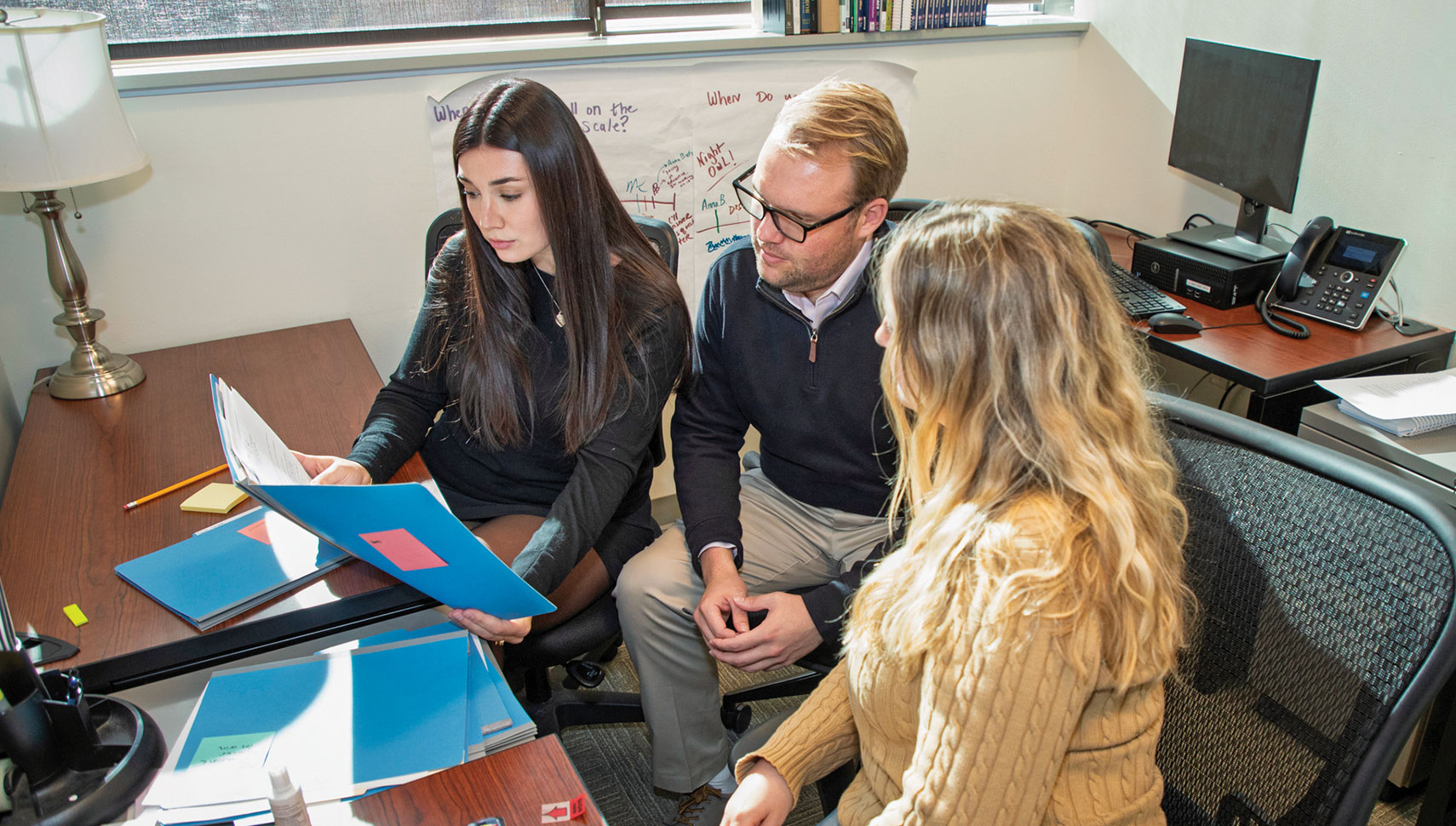 |
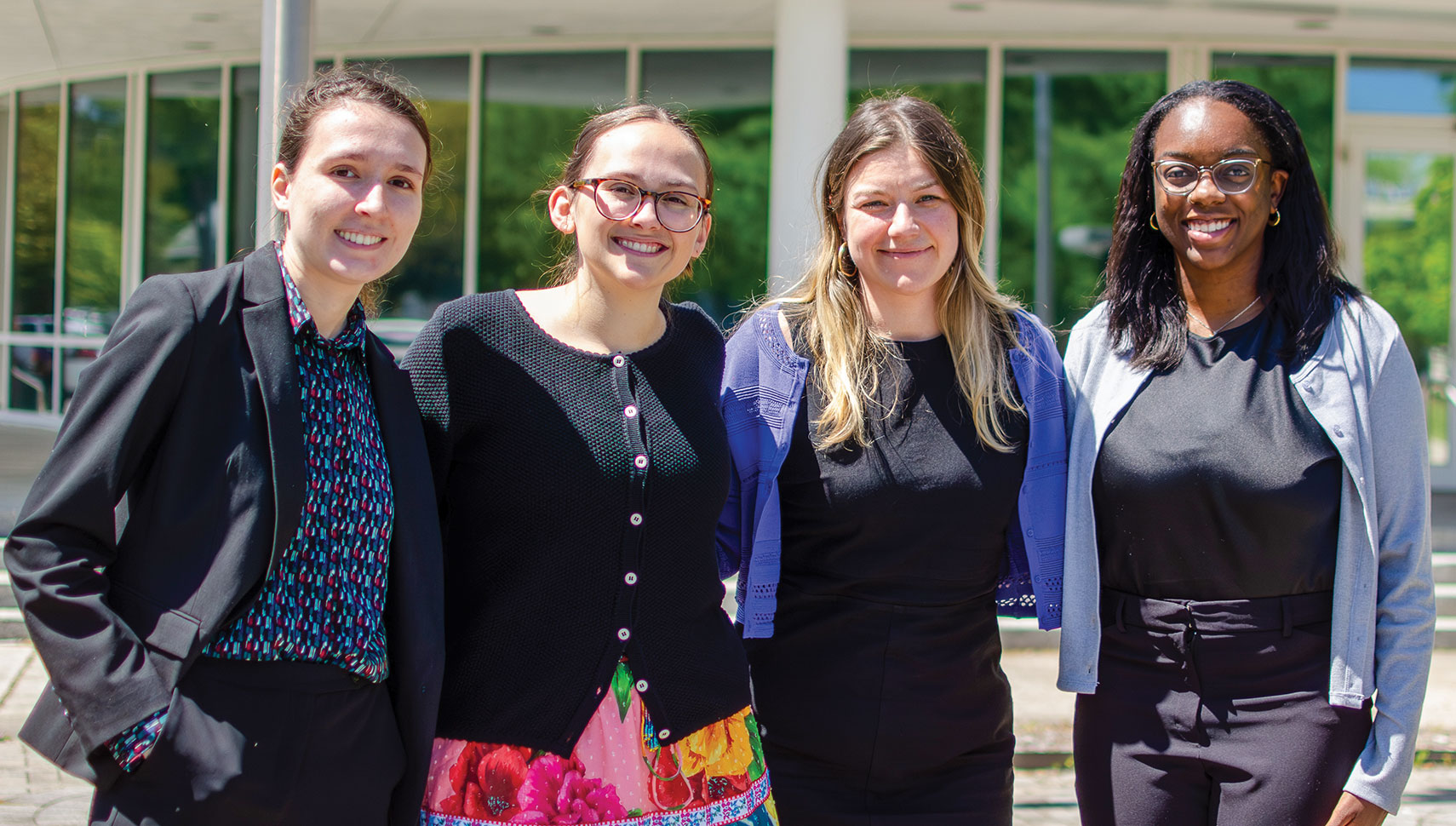
ADVOCATES: Left photo: Breanca White ’21 (right) with fellow Community Law Clinic students (from left) Juliana Bachiri and Sofia Andia and clinic director Tyler E. Dougherty. Right photo: Law students review client records.