Fifty-Two Years of Firsts
Ferris Allen ’73 reflects on a fruitful racehorsing career with over 2,000 first-place finishes, while looking ahead to his continued involvement with William & Mary
November 27, 2026
By
Isabella Dunn ’28
After more than a half century as one of the top horse trainers on the East Coast, Ferris Allen ’73 can name all his firsts — the name of his first horse, the place of his first win, the names of all his first supporters and the university where he first found the freedom to explore a wider range of interests. Today, Allen continues to give back to William & Mary through his service on the Olde Guarde Council and participation in alumni events such as this year’s W&M Weekend in Washington, D.C.
Allen’s first experience training horses came with Firecracker, a pony he owned as a child. Firecracker was an undefeated race pony champion in greater Richmond, Virginia, who was named for his Fourth of July birthday. Firecracker lived at Warwick Stable, the Allen family farm near Richmond, where Allen grew up and which he now owns.
Growing up on the farm, Allen said he was a “full-fledged stable employee” from around the age of 8 or 9.
“It was a wonderful upbringing, spending most of my days around horses,” he said.
Allen not only trained and cared for the horses but also became a pony jockey, riding races from about age 10 until he was 16, first on ponies, then from age 13-16 on thoroughbreds against seasoned adult riders.
“My love of horses came from doing every single thing that goes on with them,” he said.
After spending his childhood surrounded by horses and farm life, Allen entered his freshman year at William & Mary, where he found a new sense of freedom to explore his future. He was accustomed to working from sunrise to sunset on the farm, but college opened the door to new possibilities.
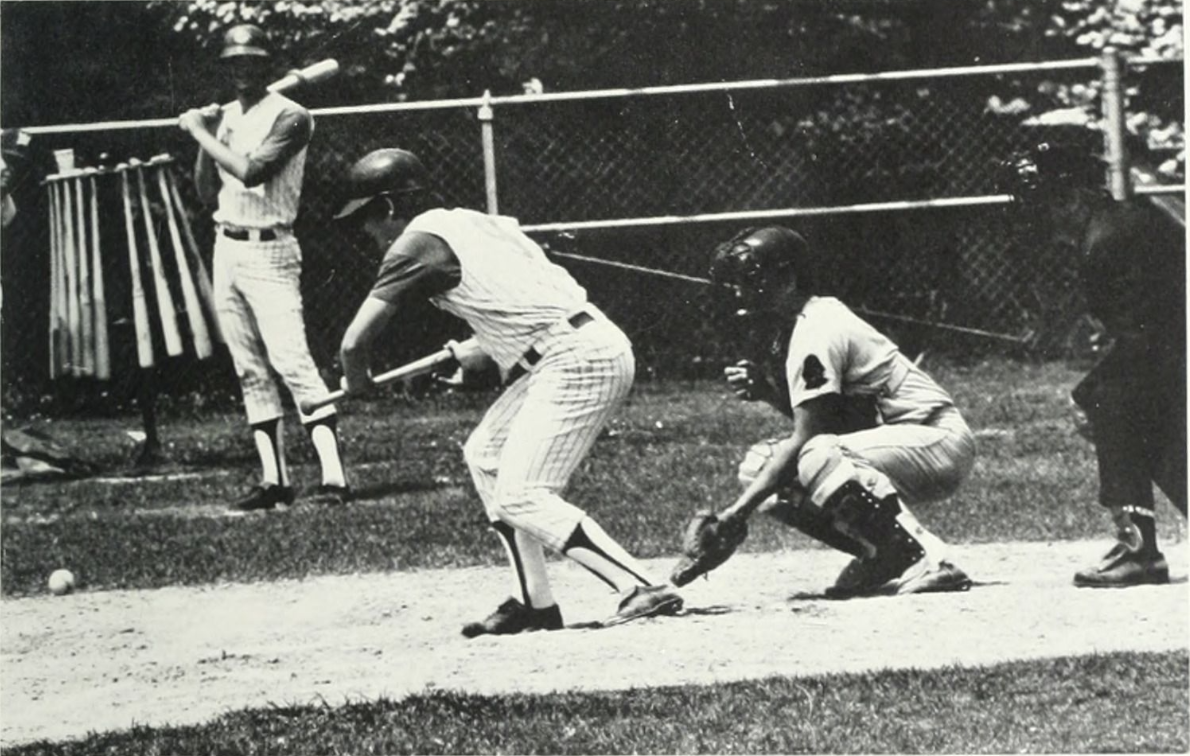
Allen initially planned to become a veterinarian and major in biology. However, the required labs conflicted with his baseball practices his freshman year at W&M, so he instead pursued a degree in government.
Allen remembers his time at William & Mary as humbling, surrounded by what he considered some of the most brilliant people he had ever met.
“It’s just an amazing group of people, and I’ve only come to be more impressed with that as these 50 years have gone by,” he said.
After graduation came another first: his job as a government teacher at a high school in the Richmond area, where he worked for three years. Even then, Allen said he never lost touch with his roots. With his teaching salary, he bought his first horse.
“The farm life never left me,” Allen said.
In 1974 in Charles Town, West Virginia, Allen recorded his first win, in his first start as a licensed trainer, with a horse named Exclusive Reef. Allen sees his horses as athletes and himself as their coach, with the job of developing them into winners. Expected to struggle, the horse pulled through for the victory, giving Allen a rush that he said “never gets old.”
Allen became a full-time trainer in 1977, when his job expanded beyond managing horses to managing people. He trained horses for other owners, connected horses with people looking for trained racehorses and recruited employees to help run his operation.
Allen said many horse trainers will tell you they “love handling horses but hate dealing with people.” But he said success in racing depends on building and relying on a team because of the labor-intensive care required for race horses.
When Colonial Downs opened in 1997, Allen was ready to pounce at the opportunity.
In the first 15 years of racing at Colonial Downs, Allen finished first or second in the trainer standings 14 times and still reigns as the track’s all-time leading trainer.
One of Allen’s favorite horses was Miracle Wood, who competed in the 1986 Preakness Stakes. Despite being a “daunting horse to handle,” the horse earned nearly $500,000 during his career, with a Maryland race named in the horse’s honor.
Miracle Wood also represented something deeper for Allen: his bond with his father, Bert Allen, who raised the horse in his backyard. Miracle Wood lived for 36 years and is buried at the family home, staying close to Allen’s heart.
Bert Allen was Allen’s first supporter and an inspiration throughout his son’s career. An avid horse-racing enthusiast and ambassador for the sport, he attended every race at Colonial Downs from the track’s opening in 1997 until his death in 2011.
“Horses kept the two of us very close all of my life until he passed away,” Allen said.
Working with horses every day keeps the memory of his father alive and reminds him of their bond.
After Bert Allen died, Colonial Downs dedicated an annual race in his honor: the Bert Allen Stakes. Allen won the first “Bert Allen Stakes,” making this one of his favorite “firsts.”
In 2014, Allen’s career took an unexpected turn when Colonial Downs closed due to legal and financial disputes. The track remained closed until 2019, but Allen said it gave him an opportunity to “slow down.”
During the slower years, Allen was able to spend more time with his two children and eight grandchildren, who live near his home in Clarksville, Maryland. He also continued his involvement in baseball by playing in the Baltimore Baseball Club.
When Colonial Downs reopened in 2019, the racing industry continued to face significant challenges, as horse racing has become much less mainstream and track betting has declined in popularity with the rise of mobile betting.
Throughout his career, Allen has witnessed a decline in the sport’s media coverage compared to professional football and basketball. Still, he said he remains encouraged by the passionate audience that continues to support horse racing.
“There’s a real majesty and beauty about the sport that we do,” Allen said. “Our sport continues to sell itself to people who will pay attention and realize how neat it is to spend the day at the races.”
Horse training had taken a leading role in Allen’s life, often leaving little time for anything else. However, outside the track he still found opportunities to reconnect with other important aspects of his life, including his lifelong belief in the value of education.
In 2023, he discovered new ways to make a difference, including creation of the Ferris Allen Bootstraps Scholarship that annually provides $10,000 to college students within the Maryland Thoroughbred racing community, and supporting his alma mater, William & Mary.
He has made an effort in recent years to reconnect with the William & Mary alumni community, including former baseball teammates. After attending several reunions, Allen realized how much he had missed.
At his 50th reunion, Allen was inducted into the Olde Guarde and began serving on its council, whose mission is to connect alumni whose undergraduate class graduated 50 years ago or more with each other and the university. They plan events, send out communications and advocate for the Olde Guarde to university leaders.
“It has been very fun reconnecting with people,” Allen said.
He has enjoyed learning about his former classmates’ lives and participating in programs that allow him to interact with current William & Mary students and experience the school’s culture today, including meeting members of the William & Mary Choir.
Allen also has enjoyed giving back through events including this year’s W&M Weekend in Washington, D.C., where he donated to an auction lot — a Colonial Downs experience — to raise money for the W&M Alumni Association.
Even though his “firsts” hold a special place in his heart, Allen has collected countless other wins throughout his career.
“We have saddled winners for 52 consecutive years,” he said.
And while 52 years of winners is a milestone in itself, Allen’s career may not be finished making history at Colonial Downs. There are still “firsts” ahead.