William & Mary has a long history of alumni serving the nation in the intelligence community and in federal law enforcement — both on the front lines and behind the scenes. By the very nature of the work, there is not a complete list of the members of the W&M community in this field, though some notable alumni stand out. Fred Kovaleski ’49, a tennis star at W&M, went on to spy on the Soviet Union for the Central Intelligence Agency undercover as a tennis pro. Chancellor Robert M. Gates ’66, L.H.D. ’98 was director of the CIA and the only secretary of defense in U.S. history to serve in successive Republican and Democratic administrations.
Perhaps lesser known, Dana Brown ’67, who passed away in January, had a distinguished career in the U.S. Secret Service. He retired after 25 years as assistant director and chief financial officer of the Office of Administration. He then led the U.S. Federal Air Marshal Service through a particularly challenging period after 9/11. His commitment to service was evident even as a student at William & Mary — he left as a junior to serve in the Marine Corps during the Vietnam War and was awarded the Purple Heart before returning to complete his degree.
Susan “Sue” Hedrick Duclos ’76 and Brian Lambert ’97, two decades apart, followed in Brown’s footsteps into the U.S. Secret Service. The agency, part of the Department of Homeland Security, has a dual mission: protection of key people, locations and events; and investigation of crimes against the U.S. financial system.
Through their service to the nation, Duclos and Lambert found purpose, supported key world events, ensured the safety of individuals and our financial system and mentored others. Aspiring to its motto “Worthy of Trust and Confidence,” they stepped into roles as civic leaders. For William & Mary’s Year of Civic Leadership, they reflected on their service and how William & Mary prepared them for their careers.
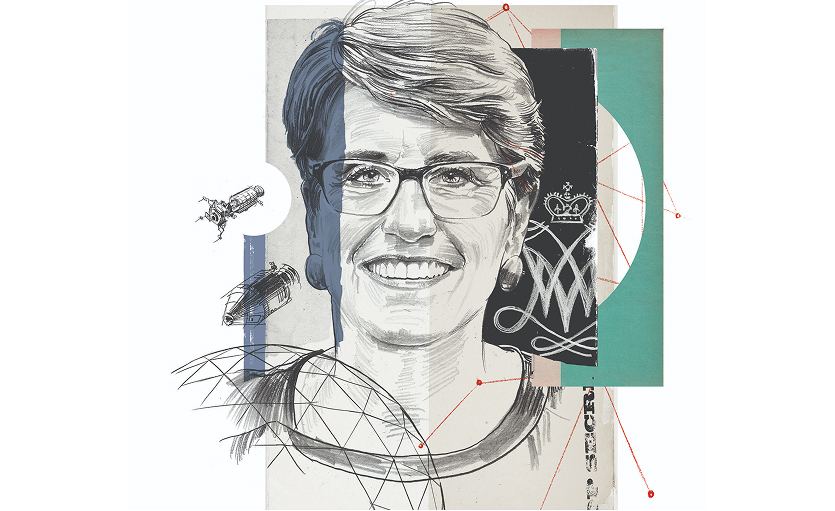
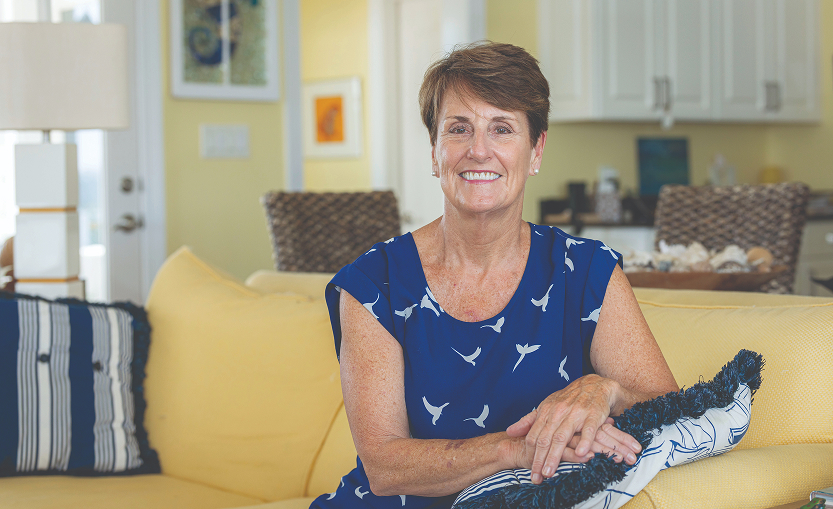
Susan “Sue” Hedrick Duclos ’76
It was July 1981, and the world was watching the wedding of Prince Charles and Lady Diana Spencer. And so was Sue Duclos, for weeks prior — watching every spot along the route first lady Nancy Reagan would take to the ceremony; listening for intelligence about threats and sending it back to Washington, D.C. She remembered sitting in Terrorism School as a 22-year-old recruit and her instructor showing the class a photo of a woman pushing a baby carriage across a busy city street. The class agreed she was not a threat — but the carriage contained a bomb. Many lives would have been lost if the situation had been real. So Duclos spent long days and nights in London assessing every aspect of the wedding plan alongside British intelligence services, trying to imagine every possible scenario. When the big day arrived, everything went according to plan.
When Sue Duclos graduated from William & Mary, she didn’t know what she wanted to do. She just knew that she wanted an adventure.
In her 13 years in the Secret Service and then two decades in various intelligence, defense and homeland security positions, she certainly found it. She protected U.S. and foreign heads of state, investigated foreign and domestic threats against U.S. presidents — including a Libyan plot to kill President Ronald Reagan in 1981 — and against foreign dignitaries, including the pope and the shah of Iran. As well as her trip to London to ensure first lady Nancy Reagan’s safety at the royal wedding, she traveled to Japan to protect President Ronald Reagan at the 1986 G7 Summit, where homemade rockets were fired at the venue.
She interviewed Eastern Bloc defectors to the United States during the Cold War, investigated how and why spies gave away our most sensitive national security secrets, and worked with rocket scientists on national security satellites.
“It didn’t feel like work,” she says. “It felt like a series of once-in-a-lifetime opportunities.”
Duclos was the first in her immediate family to go to college. Her dad told her from a young age that she was going to go to William & Mary, the school he considered to be the “most prestigious Virginia institution and probably the best in the history of the world,” she says. She was accepted and became an elementary education major, at his suggestion.
A disappointing student teaching experience convinced her to look outside the teaching profession for her next move after graduation.
“My dad was working for the Library of Congress, and he recommended I become a congressional research specialist or something like that,” she says. “And so I went to an interview in the Capitol rotunda; the light was streaming through the windows, and all I saw was dust particles and little old ladies sitting around the table with their noses in books, and I said, oh my gosh, no!”
Flipping through a binder of government job openings one day, she saw a vacancy notice for a clerk-typist for the Secret Service. The pay was low, but she had a hunch it would “not be boring.” Just two days into her new job, her hunch paid off.
“The director from the personnel pool came and got me. She said, ‘You’re going to be on a special assignment, at Henry Kissinger’s house.’”
For the next 30 days, she helped agents complete a technical security assessment for then-Secretary of State Kissinger — deciding where to put cameras, fencing and other security measures. She was hooked.
From there, she was promoted to intelligence research specialist and assigned to the Intelligence Division Foreign Intelligence Branch/Middle East desk, and “things were hopping,” she says. In March 1977, she was in Washington, D.C., for the Hanafi Siege terrorist attack and hostage standoff. Duclos was sorting through intelligence from the U.S. and abroad about the attack and assessing whether and when there could be additional threats.
The high stakes of her assignment didn’t get to her, though.
“William & Mary prepared me for that pressure, from the very first day of orientation when I realized I was probably 400 books behind on the reading list,” she says. “I discovered since then that I have a huge capacity for processing incoming information. And maybe I’m an overachiever! But the mission is so compelling, and I wanted to do my part.”
She quickly found that the more she said “yes” to opportunities and volunteered for special assignments, the more responsibility she was given. She never applied for another job; her career was a series of opportunities taken and promotions earned.
“The more I did, the more I learned and the more I got to do,” she says. “Ultimately, I was promoted to supervisor of the Foreign Intelligence Branch. Others saw the leader in me before I did. For me, the Secret Service was the stepping stone into the intelligence community and the best career ever.”
As her career progressed and she moved to the Central Intelligence Agency, her work evolved to budget building, congressional testimony and policy making. As a senior executive, she oversaw billion-dollar programs and thousands of people at the National Reconnaissance Office (NRO), from rocket scientists to managers, and also hired retiring Secret Service agents looking to extend their careers.
During Duclos’ tenure at NRO, a woman from the systems engineering directorate came to Duclos, seeking to be part of the new ground directorate she was helping to create. In her male-dominated field, men had told then-Air Force Capt. Lisa W. Mandes never to laugh or even smile at work because it was unprofessional. Duclos immediately took Mandes under her wing and provided a clear example of how to lead while still keeping her personality and sense of humor.
“There is no one like her,” says Mandes, who retired as a full colonel in the Space Force last year and is now branch chief, Command, Control, Communications, Computers, and Cyber (C4), Acquisition and Sustainment for what is now known as the Department of War. “She had a way of being able to speak when people weren’t valuing her opinion, to make them be quiet and listen. She is always personable, never belittling, and always saw the lightness in even very serious situations.”
Even with her sense of humor, Duclos was aware every step of the way that her decisions were critical.
“I never had a job after William & Mary where lives weren’t on the line,” she says. “I was proud to serve my country and to represent the USA in international forums when called upon to do so.”
Through all the excitement of her career, she still stayed connected with William & Mary. She brought her father to football games. She stayed in touch with her sorority sisters Teresa Sato ’76 and Nancy Weiner McMahon ’76, attended class reunions and served as a class ambassador.
Now, Duclos is retired, living in eastern North Carolina and adjusting to the new pace of volunteer work. She serves her church and a local music nonprofit, and she finds herself still stepping into leadership roles — “I hate a leadership vacuum and I just want to be productive and get things done,” she says. She helped write a book on the history of her rural area, inspired by her love of cemeteries, which she discovered in an anthropology class at William & Mary.
Duclos is a member of the Boyle Legacy Society, Bell Society and Fourth Century Society and supports the 1693 Scholars program at William & Mary in honor of her father. She mentors students who are interested in following in her footsteps into the Secret Service and intelligence community, advising them about what might disqualify them in the rigorous background checks and encouraging them to volunteer for additional duties once they begin their careers. “Saying yes to every opportunity served me well,” she says.
For her 50th reunion in April, Duclos was the keynote speaker at the Olde Guarde Induction Ceremony. Before she and her classmates processed through the Wren Building in their graduation caps and gowns, she shared with them her memories from W&M, her long career and her hopes for the future.
“A 50th reunion is a rare gift,” she told her classmates. “It gives us the chance to look back with perspective, to appreciate the long arc of our lives, and to reconnect with the people who knew us before life got complicated.”
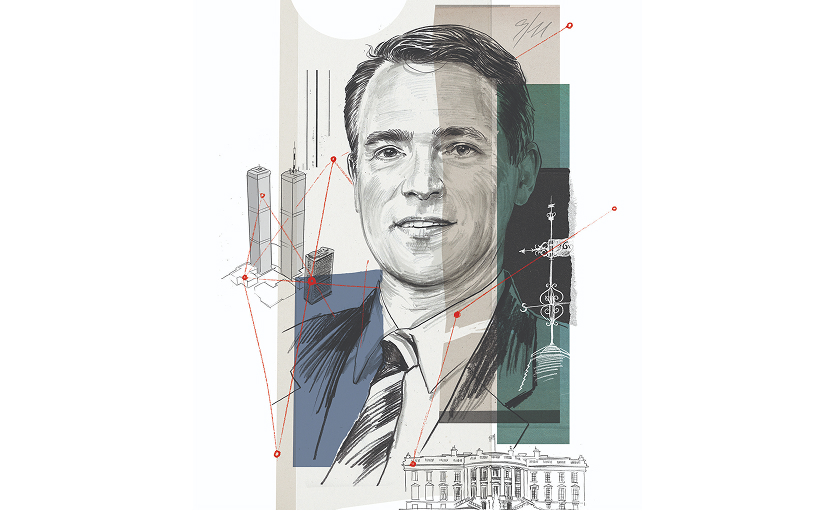
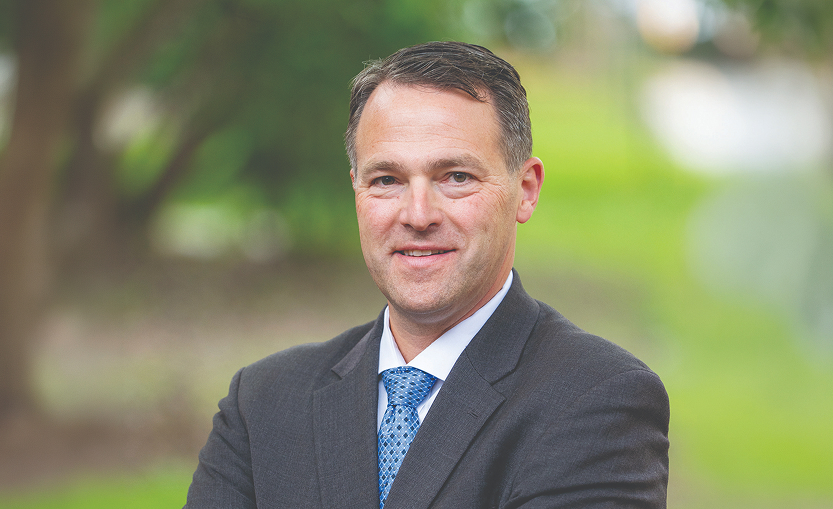
Brian Lambert ’97
It was July 2000, and Brian Lambert was at Camp David for the peace talks among President Bill Clinton, Ehud Barak of Israel and Yasser Arafat of the Palestinian National Authority. It was his first assignment out of training — the midnight shift of protecting Barak alongside Israeli security. Anything happening to a foreign dignitary on American soil would be a crisis, and the talks were at a crucial stage. Standing with the Israeli team and watching the Palestinian National Authority team walk by, he was struck by the palpable hatred coming from each side. It brought home how deep-seated the conflict was and the importance of his small role in the path to resolution.
Joining the Secret Service also opened the world for Brian Lambert in ways he didn’t think were possible.
“I got to do all these things, all over the world, that a small, poor kid from Richmond, Virginia, wouldn’t otherwise have been able to do,” he says.
That included everything from working on the protective details for Presidents George W. Bush and Barack Obama to traveling all over Europe, the Middle East and Africa investigating financial crimes to attending the World Cup in Qatar (for work purposes — to prepare for the U.S. hosting the World Cup in 2026). When he retired from the Secret Service at the end of 2024 after 25 years, he was the assistant director of the Office of Investigations — overseeing 2,150 special agents and 850 analytical, administrative, professional and technical employees throughout 162 domestic and international offices.
One of his first postings was in New York City. On the morning of Sept. 11, 2001, as he drove through the Holland Tunnel into Manhattan, he heard a radio transmission from his office that a plane had struck the World Trade Center. His office was in that complex — building 7 — and was destroyed by falling debris and fire over the course of the day. Lambert remembers the confusion and chaos. He parked his car behind building 7 and rushed to the scene as he tied his tie, securing evidence on the ground — including an airplane wheel from the first jet.
But there were happy memories from his time stationed in New York City, too, and in future assignments he looked forward to returning to the city. Each fall, the United Nations met, and Secret Service agents from all over the world gathered to help protect the heads of state attending.
“It felt like William & Mary Homecoming & Reunion Weekend, to see everyone you went through the academy with or had worked with again. I loved that about the Secret Service — similar to William & Mary, it was small enough that you could always find someone you knew, but large enough that you could meet somebody new,” he says.
Lambert came to William & Mary in part because of his family history here — his grandfather, J. Wilfred Lambert 1927, L.H.D. ’81, G ’97, G ’99, was a beloved teacher and administrator, including vice president of student affairs when Sue Duclos was a student at W&M. His grandmother, Anne Nenzel Lambert 1935, G ’97, G ’99, was also an alumna, and his aunt Louise Lambert Kale HON ’09 was a long-time employee. His brother, Matthew T. Lambert ’99, followed him to W&M and is now senior vice president for university advancement.
“My whole universe was Richmond, but we’d come to Williamsburg at Christmas time, and there was something so magical about the brick buildings and the history,” he says.
He became a psychology major, appreciating the way it helped him make sense of human behavior. But it was a religion class he took in the Wren Building with the late David Holmes, Walter G. Mason Professor of Religious Studies, Emeritus, that stuck with him most.
“He was a big fan of a liberal arts education, and he used to say — and this held true throughout my time in the Secret Service — if you take out of your education the ability to think critically and to write effectively, you’ll be fine in any career,” he says.
Lambert graduated from W&M in 1997 with a clear vision of what he wanted to do next — go into law enforcement. As a student looking for a job to help cover his loans, he had joined the student patrol as a sophomore. The supportive atmosphere he found there led him to stay with the patrol until graduation.
“There were several police officers who let this curious kid who asked a lot of questions tag along, and they really invested in us students who were interested in the profession,” he says.
Following the path of Dana Brown before him, Lambert started as a police officer before making the switch to federal service. He was a police officer for Chesterfield County, Virginia, for two years, before a mentor on the force encouraged him to apply for the Secret Service. He liked the investigative aspect of policing and was excited by the dual mission of the Secret Service — it was formed in 1865 to combat counterfeiting, but expanded in the 1890s to include the protection elements it is most known for today.
After his time in New York City, Lambert headed to Washington, D.C., for presidential protection details for the Bushes and Obamas. He was then in Flint, Michigan, for the public health crisis caused by lead in the drinking water, and to provide security for the presidential primary debate between Hillary Clinton and Bernie Sanders in 2016.
In January 2020, Lambert had the opportunity to move to Rome to head that field office, relocating his wife and five kids across the Atlantic. He covered the investigative work and protection in Southern Europe, the Middle East and non-French-speaking Africa. During this time, as part of the Secret Service’s financial crime-fighting mission, he traveled to South Africa and oversaw the takedown of a prolific international crime syndicate called Black Axe.
Though the pandemic hit Italy hard, he was glad to give his children the experience of living in another country, where they attended an international school and traveled throughout Europe with their sports teams.
“Personally, I found the transfers one of the biggest blessings,” he says. “I have a built-in network everywhere I go. It opened the world for my family. I wouldn’t have been able to do that otherwise.”
In July 2024, he went through what he calls one of the hardest periods of his career, when there was an assassination attempt on then-candidate Donald Trump at a rally in Pennsylvania. Racing into the agency’s crisis center that evening, and for the weeks and months following, he remembers feeling that all eyes were on the Secret Service for their actions on that day, and tensions were high.
Another challenge of his role? “Living on somebody else’s schedule,” he says ruefully. “It’s a career of service, so you always have to keep in mind that you’re there to protect and serve. It’s hard to juggle families and birthdays and anniversaries, because you are part of the team, and you have to be there for the mission.”
Along the way, he’s mentored younger agents, providing them advice for their careers and cheering them on as they rise in the ranks. He’s passed on the advice he learned from Professor Holmes about thinking critically and writing effectively.
“People get so caught up in thinking that we were looking for a certain degree, and I think students are shocked that I don’t care what your degree is in,” he says. “It’s like Professor Holmes said: I need to see you can think critically and write effectively. I’d love if you were really gifted in history or something where you bring a liberal arts & sciences perspective to your work. We’re going to teach you how to do the job.”
Much like Duclos, he encourages new hires to take as many assignments offered as possible. He remembers a stint he did in human resources, learning that process, and how much it benefited him later as a leader and manager.
Lambert is now chief safety and security officer for Fairfax County Public Schools in Virginia, the ninth largest school district in the nation with 177,000 students.
“Just like in the Secret Service, no two days are the same. I love that. There’s always something different, some new initiative, something to learn. It’s a public service job. I’m protecting kids. It’s clear, it’s tangible and it feels good.”
The chair of the school board is a fellow W&M graduate, Robyn Lady ’90, and they frequently reminisce about their alma mater.
“I’m just so proud to have gone to William & Mary,” says Lambert. “It’s the place I call home.”