Engineering Cures
Undergraduate research at William & Mary led Rui Yin '19 to her career in bioengineering
June 10, 2026
By
Sadie Downing ’26
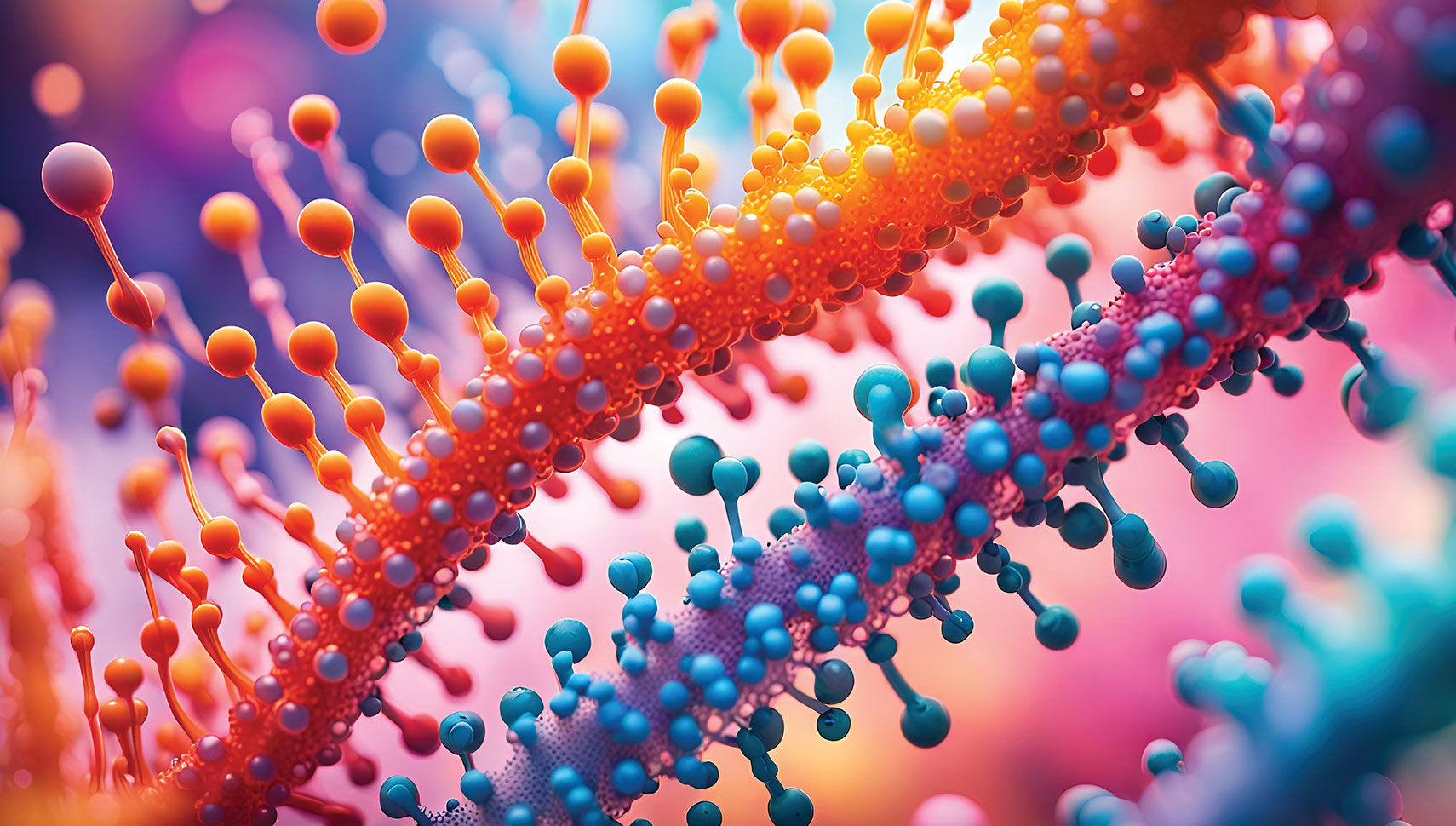
Rui Yin ’19 always wanted to do work that benefited others. At William & Mary, she found the research environment to pursue what she was drawn to: developing proteins that can be used to treat diseases such as cancer and autoimmune disorders.
“I figured that one way I could be useful for society is to help save lives, and being able to cure disease is one really effective way of saving lives,” she says. “That drive came with me from home.”
Yin grew up in Guangzhou, China, and came to the U.S. to attend college. She had become aware of William & Mary and thought it would be a good choice.
As well as the education William & Mary gave her, Yin gives the university credit for preparing her culturally to work in the United States. “There’s this really rich cultural exchange between people from all over the world,” she says. “That’s the type of soft skill that’s hard to replace.”
Coming to Williamsburg as an international student with no family or connections in the country might be daunting for many people. Yin, however, wasn’t worried.
“What was there to be afraid of?” she says. “It might sound daunting, but I always knew where I came from. That grounding gives you confidence, and you make a family for yourself wherever you land.”
As an undergraduate, Yin worked in the lab of biology professor Oliver Kerscher, where she got her first hands-on experience engineering proteins, studying how they are modified and regulated within living cells.
Proteins are molecules that are critical to the functioning of our bodies. Cells run on the complex work of proteins, which accomplish different tasks depending on their structures. For example, some proteins are antibodies, protecting the body from foreign viruses and bacteria, while others are messengers, sending signals between cells, tissues and organs that coordinate biological functions. They are essential for cell and tissue growth, and are constantly being repaired and replaced over time. Proteins also play a role in diseases when they are mutated or dysfunctional.
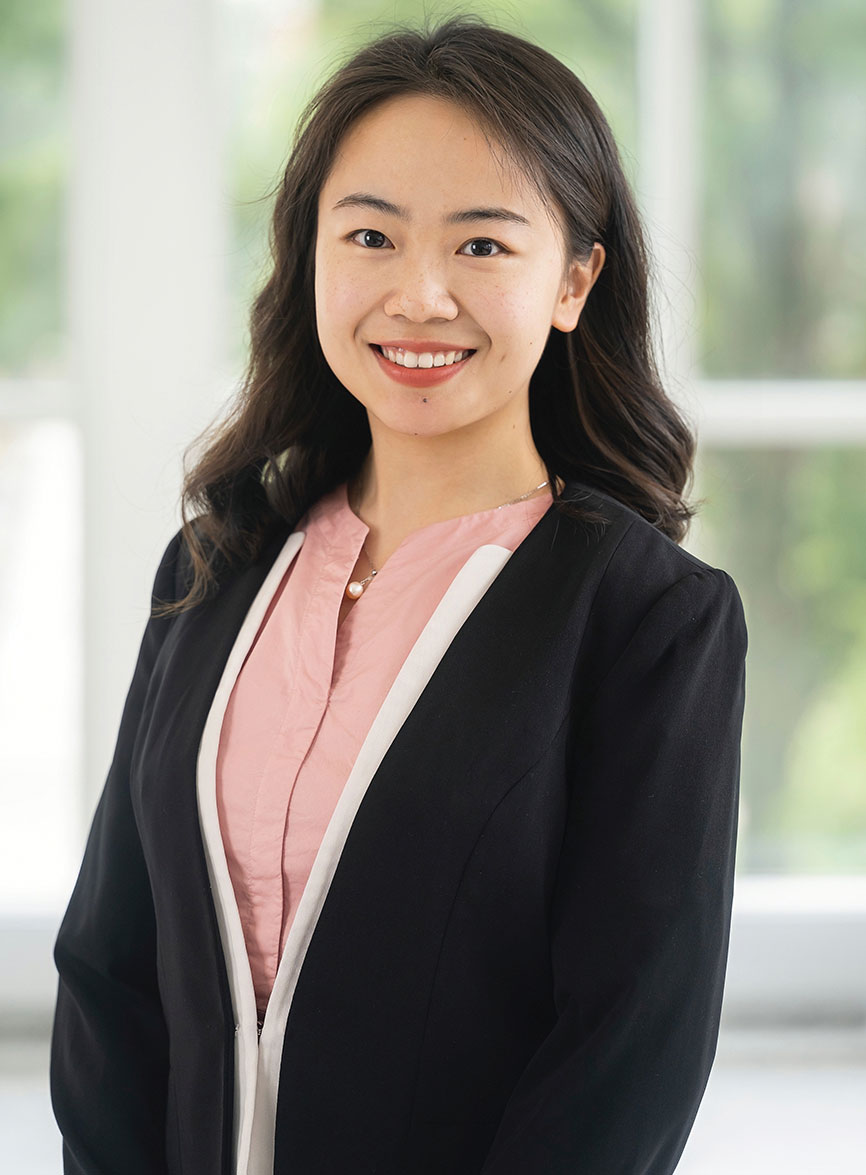
Before working with Kerscher, Yin saw two possible paths to achieve her goal of helping save lives: becoming a doctor or developing drug therapies. Her research in Kerscher’s lab inspired Yin to continue working on developing proteins.
After graduating from William & Mary, Yin went on to earn a doctorate in biological sciences from the University of Maryland. She now does research for the Vancouver, Washington-based biopharmaceutical company Absci, continuing to expand her knowledge in the field of protein engineering.
Recently, she has been harnessing the power of artificial intelligence, a possibility that she was already investigating as a W&M student. Yin started considering how AI could be helpful in the last year of her undergraduate program, when a breakthrough moment hit her one day while doing work in Swem Library.
“I was pulling up multiple images, so much that it froze the computer,” Yin remembers. “I was painstakingly counting cells. That’s when I came across a tool called ImageJ.” Developed to accelerate the lengthy process of counting cells by hand, ImageJ could also pick up patterns that were nearly impossible to spot with the human eye.
“It was just game-changing. I suddenly came to realize that computational tools, when applied to biology research, really have immense power,” Yin says. During her graduate studies at the University of Maryland, she continued to learn about computational tools that improved the speed and accuracy of biology research.
Her graduate studies introduced her to the algorithm MaSIF, which used computer vision technology to characterize protein surfaces, with implications for drug discovery, further reinforcing for Yin that computational tools could be a powerful accelerating force in biology research.
What she describes as the biggest epiphany for her came in 2020, while she was participating in the CASP14-CAPRI50 competition. The competition challenged the researchers to accurately predict protein structures. During the competition’s final presentations, participants witnessed the results of AlphaFold2, which dominated the broader CASP14 challenge because its predicted accuracy was leagues above any of the other tools, she says.
“People have used AI for some time in this field, but AlphaFold2 really demonstrated the power of AI,” Yin says.
Yin sees artificial intelligence as a tool that can help advance the speed and accuracy of biology research. However, she cautions against thinking AI will replace foundational steps such as wet lab experiments.
“With AI, you are able to generate hypotheses much faster, but you need something to test the hypotheses you generate. Then you also need more data to train your AI models, so you need some way of getting those data,” Yin says. “For those two reasons combined, wet lab experiments have become even more important.”
Yin emphasizes that AI isn’t perfect.
“We really need domain knowledge in order to use AI properly,” she says. “What we humans possess that AI doesn’t, at least not yet, is intuition. And the intuition only comes from you knowing things yourself. It’s even more important that you become a domain expert.”
Her research focuses on using AI to analyze targets for specific proteins that are nicknamed “undruggables” for their resistance to conventional methods of adherence. AI allows her to engineer antibodies that can target these “undruggables” more effectively and accurately.
Yin believes William & Mary’s environment played a major role in preparing her for her career. W&M’s student-faculty ratio is 11:1, with 99% of classes taught by faculty. In 2026, U.S. News and World Report rated W&M the No. 2 public school for undergraduate teaching.
She remembers her time at the university with fondness, beyond her research there. Yin met her husband, Jiacheng Song ’17, M.S. ’18, at an event organized by W&M’s Chinese student community in Nanjing, China, and she counts many of her W&M classmates among her closest friends today. “Being at William & Mary was one of the happiest times in my life,” she says.
But for Yin, the story is far from over. In the future, she plans on continuing her research in this vein. “I just have so much to learn!” she says. “It’s a broad field that contains so much stuff.”
She describes her research like a snowball, accumulating more and more over time, broadening the scope of her knowledge. “Once you solve one problem,” Yin says, “something else just unlocks itself.”