Burritos in Bengaluru
How one student’s study abroad experience inspired a multimillion-dollar business
January 28, 2026
By
Kate Hoving
Photos Courtesy Of
Bert Mueller ’11
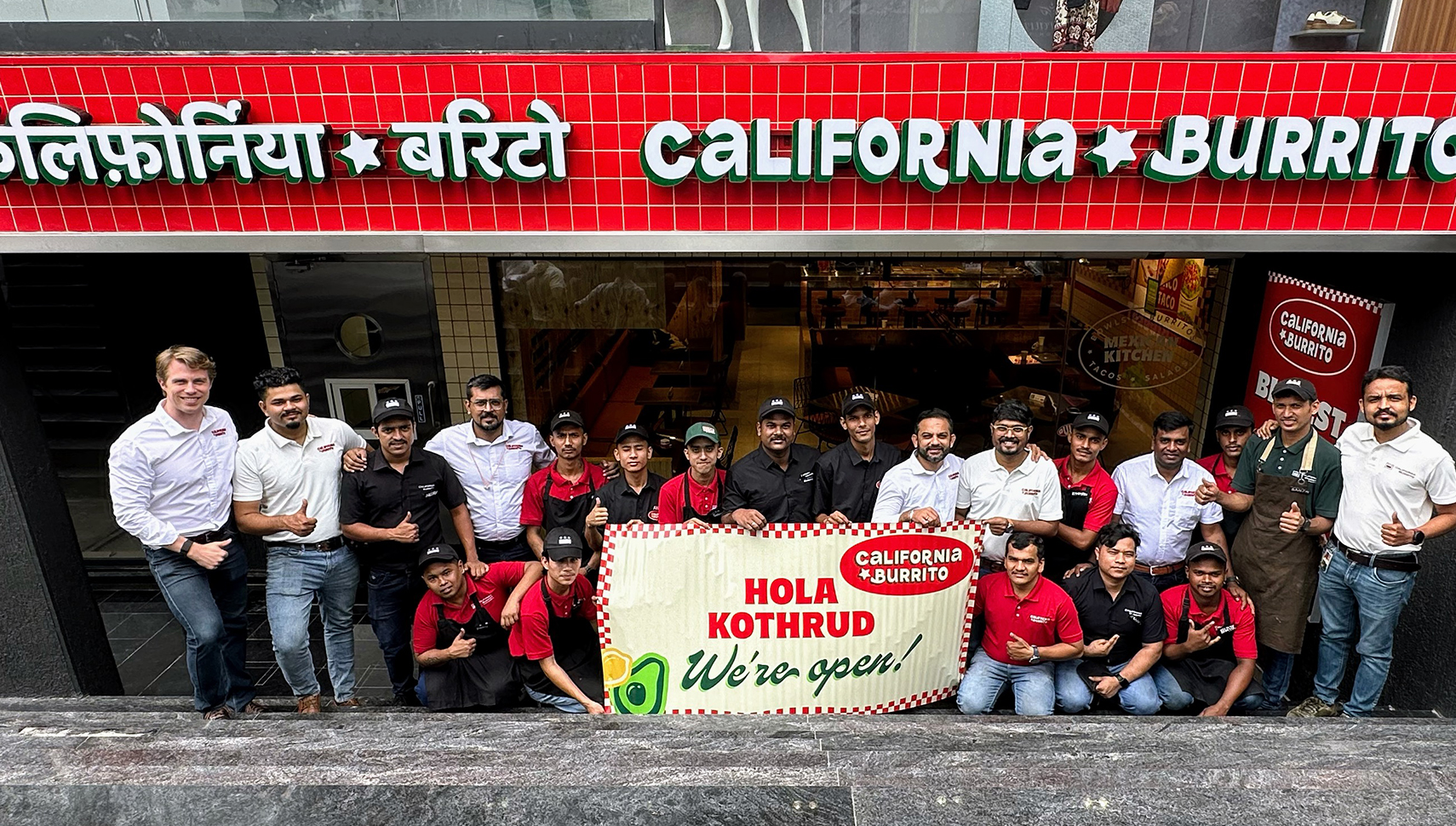
The headline for the CNBC “Make It” video about Bert Mueller ’11, posted on April 26, 2025, was irresistible: “I left the U.S. for India and built a $23M burrito business.”
It’s no surprise the story was picked up around the world. It has a charismatic hero, a journey to India and almost fairytale-like success. And to add to the magic, as he was building this burrito empire, he was also managing a solid career as a film composer, with credits including “Blood, Sand and Gold,” “Bandslam” and “Nova Roma,” among others.
But the details behind the story of how Mueller built his business are just as interesting as the attention-grabbing headline. A crucial decision to study abroad set things in motion.
Study abroad experiences are known to be transformational and often life changing. They can lead to greater confidence, increased cultural competency, flexibility and adaptability — which are also qualities of many successful entrepreneurs, along with curiosity, willingness to experiment and risk tolerance.
Curiosity
“I was a good student,” Mueller says. “I like learning.”
He was a music and public policy double major at William & Mary. Except for a love of Indian food, there weren’t any road signs pointing to a future in Bengaluru, also known as Bangalore.
But for the second semester of his junior year, he decided to study abroad in India. “I wanted to do something very different, so India fit that bill,” he says.
Although W&M now has a program to Bengaluru and Goa, it didn’t exist when Mueller was a student. He consulted with a staff member at the Reves Center for International Studies who told him about a program through the University of Minnesota to Hyderabad and Jaipur, and he was on his way.
“There were probably 20 students in the program. I was the only one from William & Mary,” he says, adding that the program operated from a rented house in Jaipur. “Students stayed with family members, so it was almost like a home schooling experience.”
Classes covered subjects such as language, history and architecture, but those were secondary for him.
“The experience of being in India was the ultimate education,” he says.
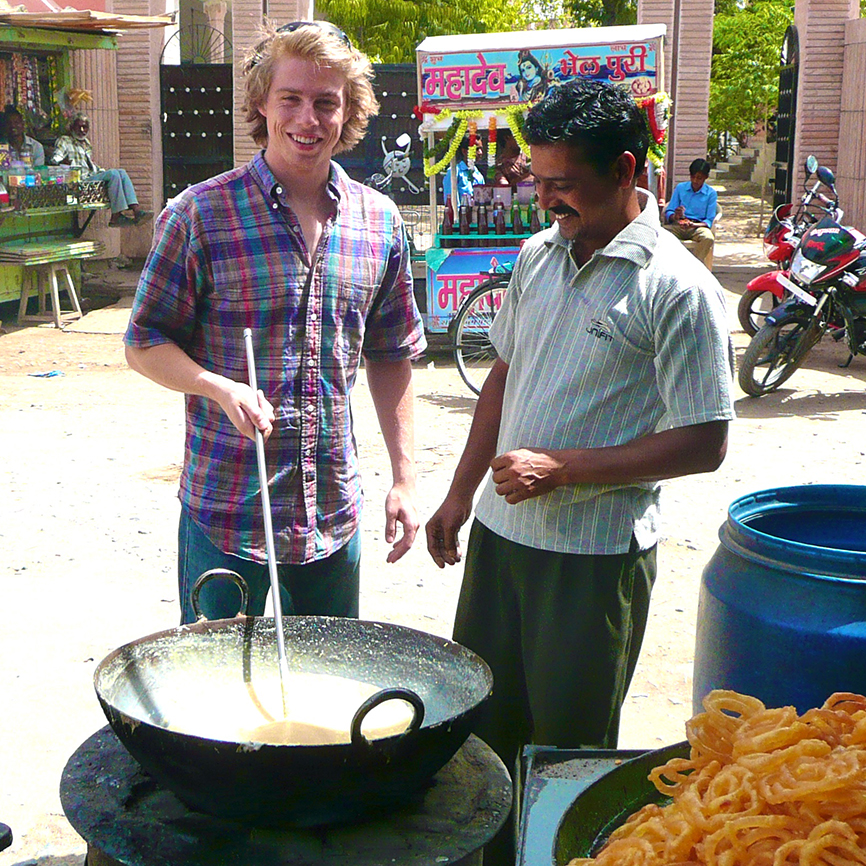
For several months, Mueller lived with a married couple with a young son and grandmother. “The food was excellent,” he says.
He traveled as much as he could during his time in India. “I was the person who organized all of our traveling,” he says. “We went to Rishikesh, Agra and Vrindavan and Jaisalmer. Many places in the north.”
After his study abroad program ended, Mueller wanted to return to India and open a business. Recalling how much his Indian hosts enjoyed the Mexican snacks a classmate shared, he decided to open a restaurant that served California-style burritos. It was a risk, but he saw an opportunity and was willing to try – with sound preparation.
Learning the business of food
He returned to Williamsburg and began to put his plan into action. First step: Learn about the restaurant business. Still an undergraduate, he got a part-time job at Moe’s Southwest Grill. “I wanted to see if I liked the work before I started a company,” he says. Mueller learned two main things: “The restaurant business is not rocket science, and it’s very people dependent.”
Working at Moe’s may have demystified elements of the food and beverage industry for him, but the experience was not going to be a road map for operating a business in India. Processes and infrastructure required a new approach and a slightly steeper learning curve.
“At Moe’s, we would buy all the ingredients from one vendor. India is very different, because for one ingredient we could have five vendors. I think everything is generally much more unreliable, so you need many more backup plans.”
Another difference is that Moe’s restaurants are franchises. Mueller did not go that route with his business strategy.
“In India there’s not a very robust legal system,” he says. So if a franchisee refuses to abide by an agreement, there is little recourse.
Learning the business of business
In addition to his work at Moe’s, Mueller found classes at William & Mary to complement his education.
“I took one class on entrepreneurship at the business school in my final semester. It was a great class, taught by Professor Richard Ash,” he says. Ash founded the Alan B. Miller Entrepreneurship Center, now called the Entrepreneurship Hub.
Bob Crawford, then CEO of Bigelow Tea, was an executive partner at the Raymond A. Mason School of Business and became Mueller’s mentor in the class. But he was not the only important connection Mueller made.
“They put you in a group of maybe five students to do a business case,” Mueller recalls. “I got lucky, because I got to do a case for Red Lobster, and Kim Lopdrup ’80, P ’11, who was then the CEO of Red Lobster, came to campus, and we presented to him.”
The personal connections and building a network were pivotal, Mueller says. “Any time you’re able to speak with people who’ve been very successful at whatever they’ve done is so important.”
Although he never changed his major, Mueller was able to take additional classes to help prepare him for the business world, such as economics and statistics. “As the business gets larger and data comes into the picture, these things become more relevant, and having some grasp of the concepts has been useful,” he says.
The ‘It’ factor
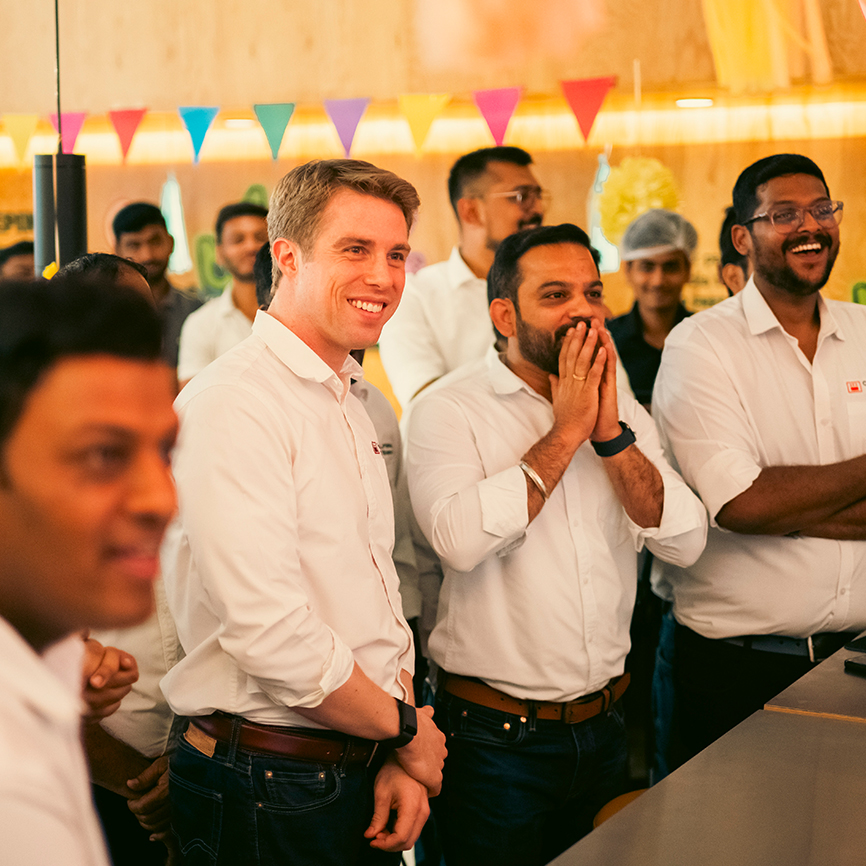
Clearly Mueller has a gift for business. He parlayed an initial investment of $250,000, cobbled together from partners and family, into what is now a $38 million enterprise. The company has 125 locations and is now expanding into managing its own sustainable supply chain.
Despite the challenges of running his own business, Mueller enjoys it. “I’m doing well, so something’s working,” he says.
Perhaps that something goes back to his study abroad experience, which for him was more than exposure to another culture and country. India drew him in and he, in turn, invested in the country both personally and professionally.
What does Mueller see as his “it” factor that led to his success?
“I think a lot of people get fatigued here, and that probably shows up in the way that their business operates,” he says. “For some reason, I get along well with India.”
One possible reason is that in addition to being a great businessman, Mueller is at heart a musician and artist. That may help explain why he loves his adopted country so deeply: “There’s a lot of art in life in India.”
Editor’s note: A version of this article also appears in the winter edition of the Reves Center’s World Minded newsletter.