The First Alphas
50 years of National Pan-Hellenic Council fraternities and sororities at William & Mary
February 2, 2026
By
Claire De Lisle M.B.A. ’21
In 2025, William & Mary marked the 50th anniversary of historically Black fraternities and sororities at the university. When the Kappa Pi Chapter of Alpha Phi Alpha Fraternity Inc. was chartered in May 1975, it paved the way for what is today a vibrant presence of six National Pan-Hellenic Council, or “Divine Nine,” fraternities and sororities on William & Mary’s campus.
“William & Mary is a place of firsts. This is where Phi Beta Kappa began 250 years ago. It feels right that the first historically Black fraternity established in the United States, in 1906, was the first one chartered on campus,” says Kappa Pi Brother Bobak Kasrai ’09.
William & Mary in 1975 looked much different than today, when 33% of the Class of 2028 are students of color. The first three Black residential students had been admitted less than a decade before, in 1967. In 1970, President Davis Y. Paschall ’32 told the Board of Visitors there were about 40 Black students at William & Mary. That same year, students founded the Black Student Organization, with Warren W. Buck III M.S. ’70, Ph.D. ’76, D.Sc. ’13 as its first president. By 1976, 103 Black students attended W&M, about 2.2%.
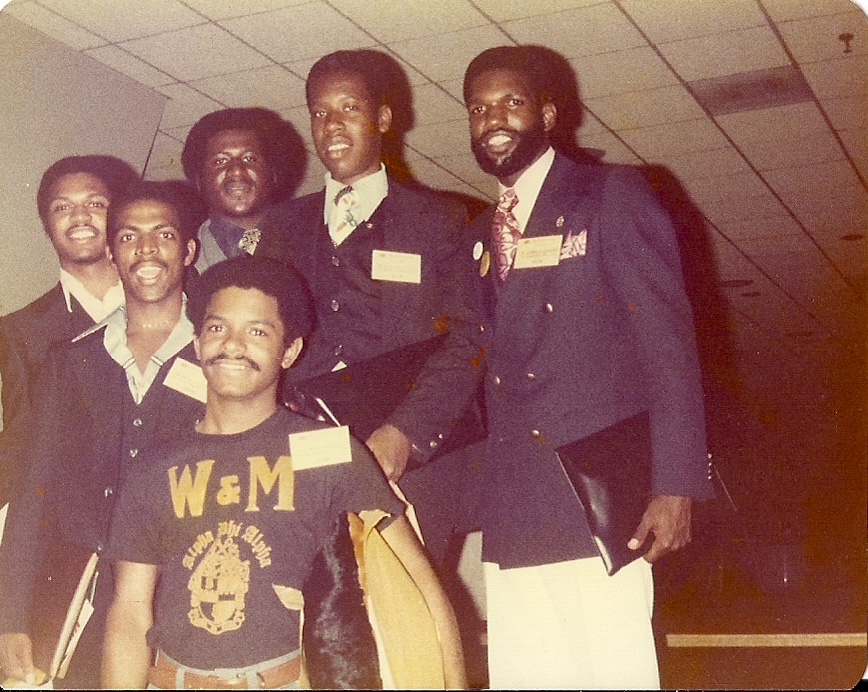
It was in this environment that the charter members of the Kappa Pi Chapter — Timothy E. Allmond Jr. ’78, Nathaniel A. Folarin ’77, P ’03, P ’08, William L. Jackson Jr. ’76, Sheldon J. Johnson ’78, John O. Little Jr. ’78, Larry A. Olanrewaju ’78, Ronald H. Smoot ’78 and Willie G. Webb Walton ’76 — came together to start a historically Black fraternity chapter at W&M.
“Being Black on campus was still something of a phenomenon,” says Jackson. “It was very easy for professors to notice whether I was in class that day.” In founding the fraternity, he says, “Perhaps we were trying to crack one additional wall.”
Jackson was a chemistry major and was often holed up in Millington Hall, studying and doing lab work. He met Webb Walton and Little at the Black Student Organization, his “only social outlet on a Saturday night.” He calls Webb Walton “the brains” and Little “the heart and soul” of their group. It was their idea, he says, to launch a chapter. “Willie had a car, so I was literally and figuratively along for the ride.”
They began meeting with representatives from fraternities — student chapters as well as alumni chapters in the area — to see which would be the best fit. Wendell T. Foster Jr. represented Alpha Phi Alpha, hosting a formal dinner for the students. They were impressed.
Becoming Official
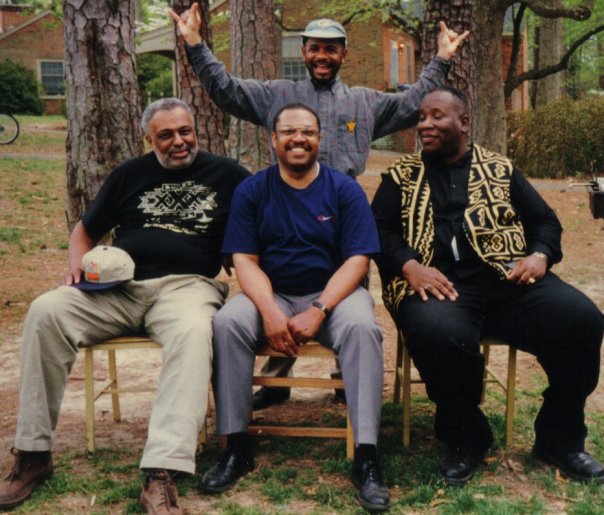
Foster had joined Alpha Phi Alpha as a Virginia Union University student, where he was one of the Richmond 34 in 1960 who conducted a sit-in at the whites-only lunch counter at Thalhimer’s Department Store. He also was a volunteer teacher for Black students during Virginia’s Massive Resistance era, when public schools closed to avoid desegregating. Foster built his career as an educator and is still an adjunct math professor at J. Sargeant Reynolds Community College in Richmond. As well as helping found Kappa Pi, he also helped found two other Alpha Phi Alpha chapters.
To launch at William & Mary, the students needed the backing of the administration, and they found another ally in former Dean of Students W. Samuel “Sam” Sadler ’64, M.Ed. ’71.
Sadler had previously worked for William & Mary as an admission counselor, with the responsibility of recruiting students from predominantly Black high schools in Virginia. At a school in Petersburg, the guidance counselor there was skeptical of how sincere he was about attracting and retaining her students.
“‘Who will look out for them at your school?’ she asked. I looked her in the eyes and said, without fully understanding the ramifications, ‘I will.’” He saw organizations like this as part of keeping that promise.
One of Sadler’s close friends, Ed Jones, was a Hampton Institute graduate (now Hampton University), and a member of Alpha Phi Alpha. Sadler had seen how connected Jones was to his fraternity and how much members cared about each other and built community.
Foster and Jones came to Sadler together about founding the chapter. Sadler’s condition for agreeing: that all students, regardless of race, would be eligible to join. This is true of all fraternities and sororities at W&M, and members of Kappa Pi have included students of all races and ethnicities.
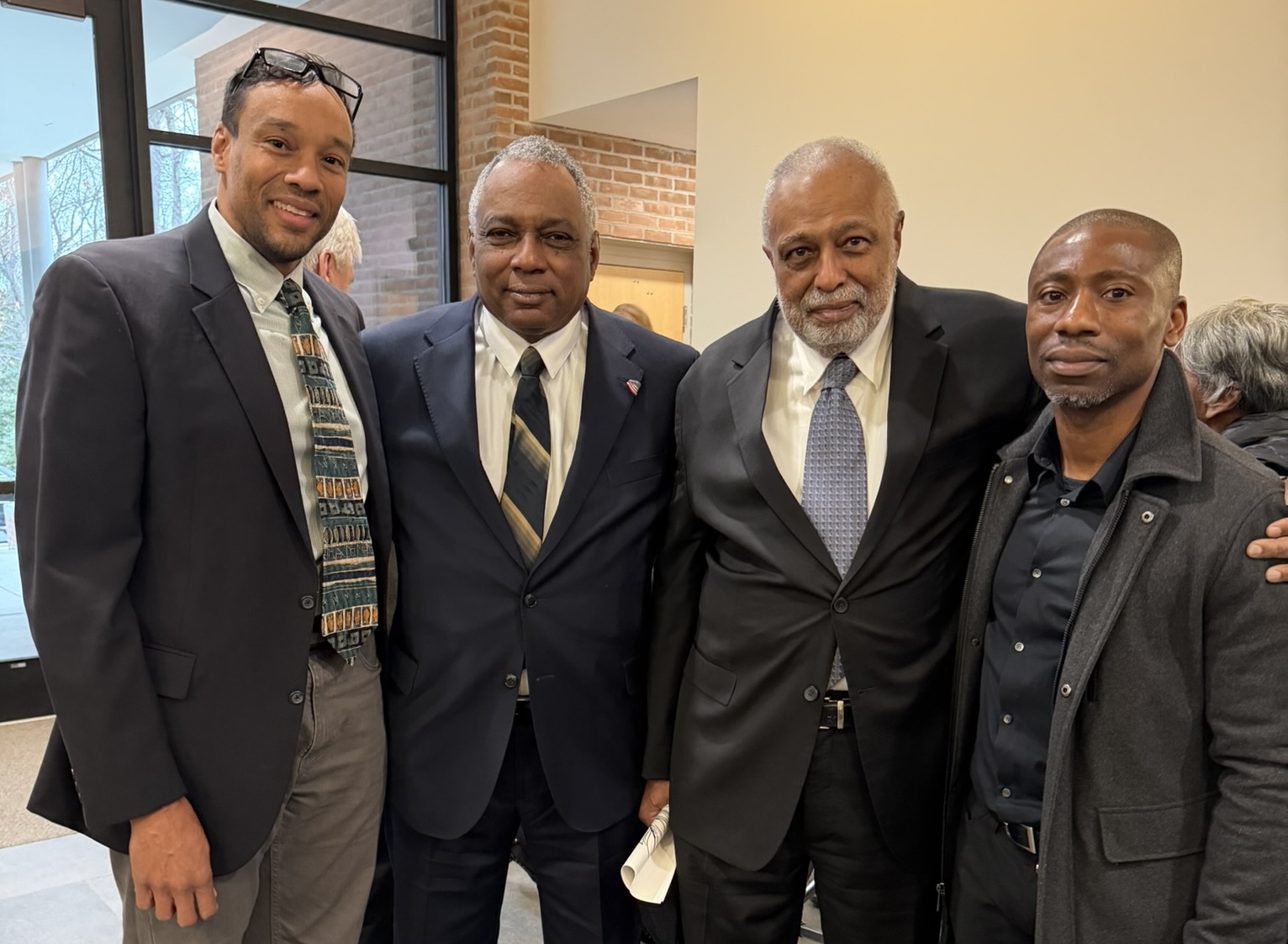
The first men were initiated into the Kappa Pi Chapter in May of 1975. In February 1976, women students followed suit and chartered the Mu Upsilon Chapter of Delta Sigma Theta Sorority, Inc. and the Nu Chi Chapter of Alpha Kappa Alpha Sorority, Inc., in 1981. The next Divine Nine fraternity to be chartered wasn’t until 1992, with the Xi Theta Chapter of Kappa Alpha Psi Fraternity, Inc. See a list of Pan-Hellenic fraternities and sororities at William & Mary.
“Creating the fraternity gave me a circle of friends outside of my comfort zone and brought people together who I wouldn’t easily have met, as a chemistry major,” says Jackson. Four of the first 10 initiates were international students from Nigeria. Jackson was the only athlete, playing briefly with the W&M basketball team.
He recalls Alpha Phi Alpha members from other schools “seeking” him out in Millington Hall during the initiation phase and being very involved in helping the new members get started and feel like part of the larger fraternity. Other fraternities at W&M ignored Kappa Pi for the most part, he said.
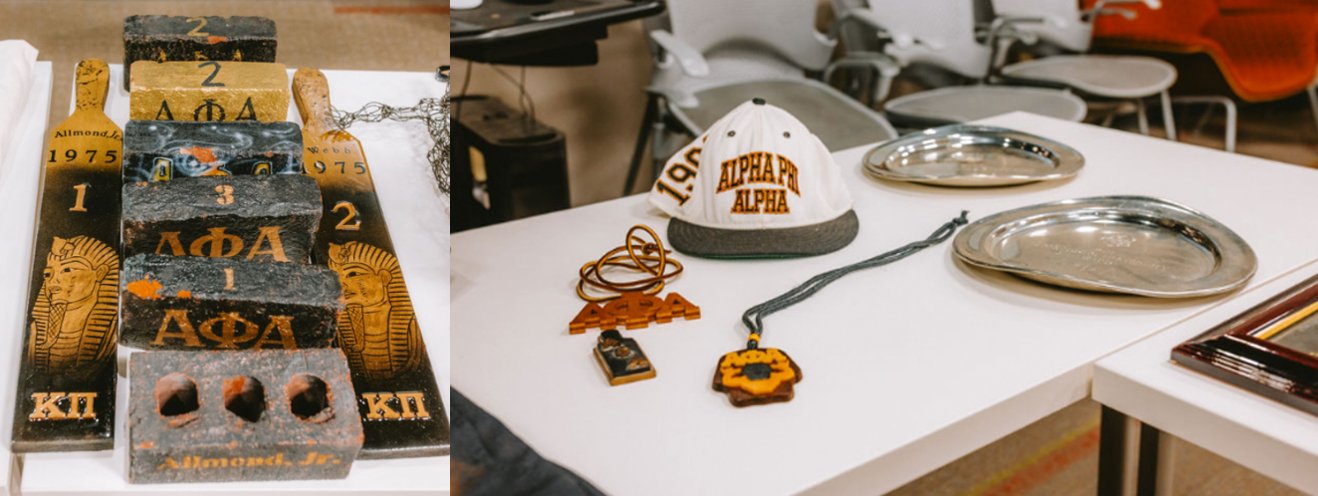
Despite his career taking him around the world — he has served as a flight surgeon with the U.S. Coast Guard, an epidemiologist with the CDC and the US Public Health Service Commissioned Corps, a medical researcher with the National Institute of Allergy and Infectious Diseases and more — he is in touch with W&M fraternity brothers across the generations. For their 40th anniversary celebration, he brought memorabilia to share from the days of their founding.
Being part of that founding class “helped me become more than just another face that passed through the school,” he says.
Foster’s Legacy
Wendell T. Foster Jr. became the Kappa Pi Chapter’s advisor, a position in which he served until 2001. Even after retiring from that role, he stayed involved, says Kasrai. When he and his fraternity brothers came to the national convention and realized they hadn’t paid their dues, they were told Wendell had already paid on their behalf.
“We hadn’t even met him yet, and he was looking out for us,” he says. “That’s just the kind of person he is.”
Foster is “highly respected, had a heart for young people and would accomplish what he said what he would do,” says Sadler. “He truly saw them as his brothers. He gave them a listening ear and they heard from him about his life experiences and the challenges he faced. He connected them to other chapters, expanding the circle of mentors.”
At the 50th anniversary celebration of the chapter in March 2025, “graduate after graduate stood up to talk about how much Wendell Foster’s support meant to them,” he says. “He built something special here.”
Reflecting on his deep connection to the chapter over the decades, Foster says, “It was great to be a part of their struggle, even though they were in small numbers, to see them stay together, to try to follow the mission of the fraternity. The camaraderie between the Brothers has always impressed me.”
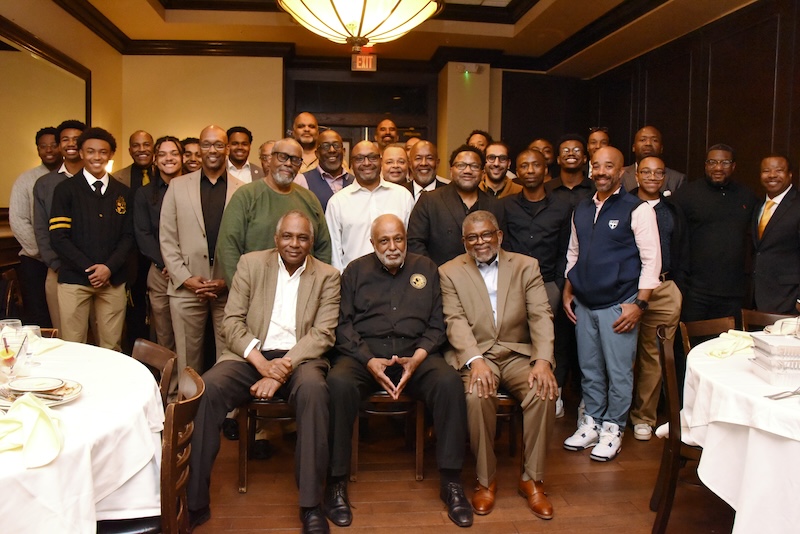
In honor of Foster’s role in founding the Kappa Pi Chapter, alumni have established the Alpha Phi Alpha Fraternity Inc. Wendell T. Foster, Jr. Scholarship Endowment (5548) to support first-generation Pell recipient students and W&M Scholars. The first scholarship was given out in May 2024, and they continue to fundraise to create an endowment so the scholarship can continue in perpetuity. This endowment joins a handful of others established at William & Mary by fraternity and sorority chapters.
Having a scholarship named for him is “a humbling experience,” says Foster. “I’m just amazed that this is happening. I’m eternally grateful and my family is eternally grateful.”
“He would want to help the underdog,” says Kasrai. “He is a perpetual educator. If you’ve been accepted to William & Mary, you’re a top-notch student. But sometimes there are difficulties where a little extra help would come in handy, and he would always help someone who needed it.”
Connections Between Brothers
There have only been 126 members of the Kappa Pi Chapter at William & Mary, with one to three brothers added each semester. Alumni from across the generations have contributed to the scholarship.
Fred Jones ’94, now a veterinarian in Fairfax, Virginia, is one of them. Jones’s father and uncles had all been Alphas, but Jones hadn’t intended to join a fraternity. However, seeing Randy Johnson ’93 had joined helped convince him.
“I looked up to Randy, and the way the Alphas carried themselves on campus, what they were doing for the community … their dedication to service was important to me,” he says.
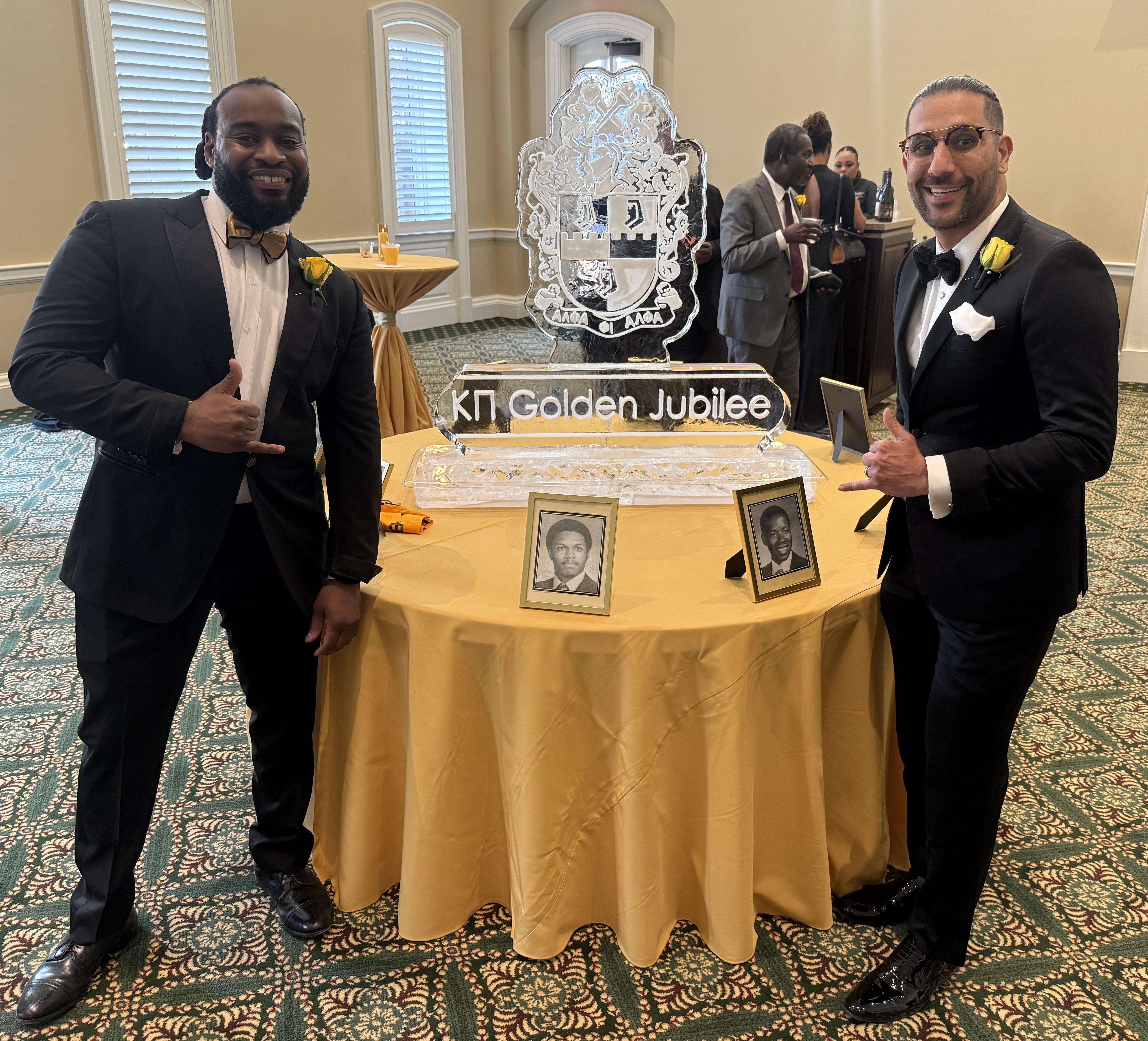
In many ways, Kasrai, who now works in education technology, has been the keeper of the chapter’s history and the glue that keeps brothers connected, though he credits Foster for the same role.
Like Jones, Kasrai didn’t intend to join a fraternity at W&M. He was familiar with Divine Nine fraternities after receiving scholarships from Alpha Phi Alpha and Omega Psi Phi Fraternity Inc.. As a student, however, soon met Alphas who made an impression.
“Royce McAllister ’07 was older than me, and he was everywhere. If I went to a student club organization meeting, he was there and had a leadership position. If I went to a party, he was there having a good time. If I was working on something academically, he was there, and he was doing well in school. He would be in Yates every Friday taking anyone who wanted to go to the barbershop,” he says.
Kasrai was also a volunteer basketball coach, and some of his fellow coaches were also Alphas. They shared Kasrai’s love of community service and welcomed him into their tight-knit group. He started researching Alpha Phi Alpha and discovered its members included Martin Luther King Jr., Supreme Court Justice Thurgood Marshall and Duke Ellington, as well as people in his hometown of Fredericksburg and at his church. Kasrai, who is not Black, knew he wanted to be part of it.
“Once I joined, it became very important for me to get to know all the people who came before me. I would just cold call and email these people, and look for people wearing our Greek letters at Homecoming,” he says. “When brothers have something unfortunate happen in their lives, I just start calling people who would be good to connect with them… who has been through this experience?”
One of his favorite moments from reconnecting alumni came from Kappa Pi’s 40th anniversary celebration in 2015. He watched as Jackson reunited with his old friend Little after decades away, hugging, crying and picking up right where they let off. Little passed away in 2023.
A Presence Felt Today
In 2020, students came to now Senior Advisor to the President Chon Glover M.Ed. ’99, Ed.D. ’06 with a vision — to create a garden at W&M raising the visibility of historically Black fraternities and sororities at William & Mary and celebrating their contributions to our campus community, past, present and future. The National Pan-Hellenic Council Garden would be located along the east edge of the sidewalk that cuts across the Crim Dell Meadow, connecting the Sunken Garden to James Blair Drive and the Sadler Center. Fundraising for the project continues.
Each Homecoming & Reunion Weekend, Divine Nine organizations at W&M participate in Stompfest, a step performance event popular throughout the campus community. Members also participate in the Homecoming Parade and Impact Week and hold other events throughout the year. They conduct service projects and collaborate with other Greek organizations on campus. Almost 50 students currently participate in National Pan-Hellenic Council fraternities and sororities.
From those first members of Kappa Pi grew a legacy that will continue far into the future.
“It makes me so happy to see the growth. I think that’s important for the university and the students,” says Jones. “I’m proud our brothers were the catalyst to get it going.”