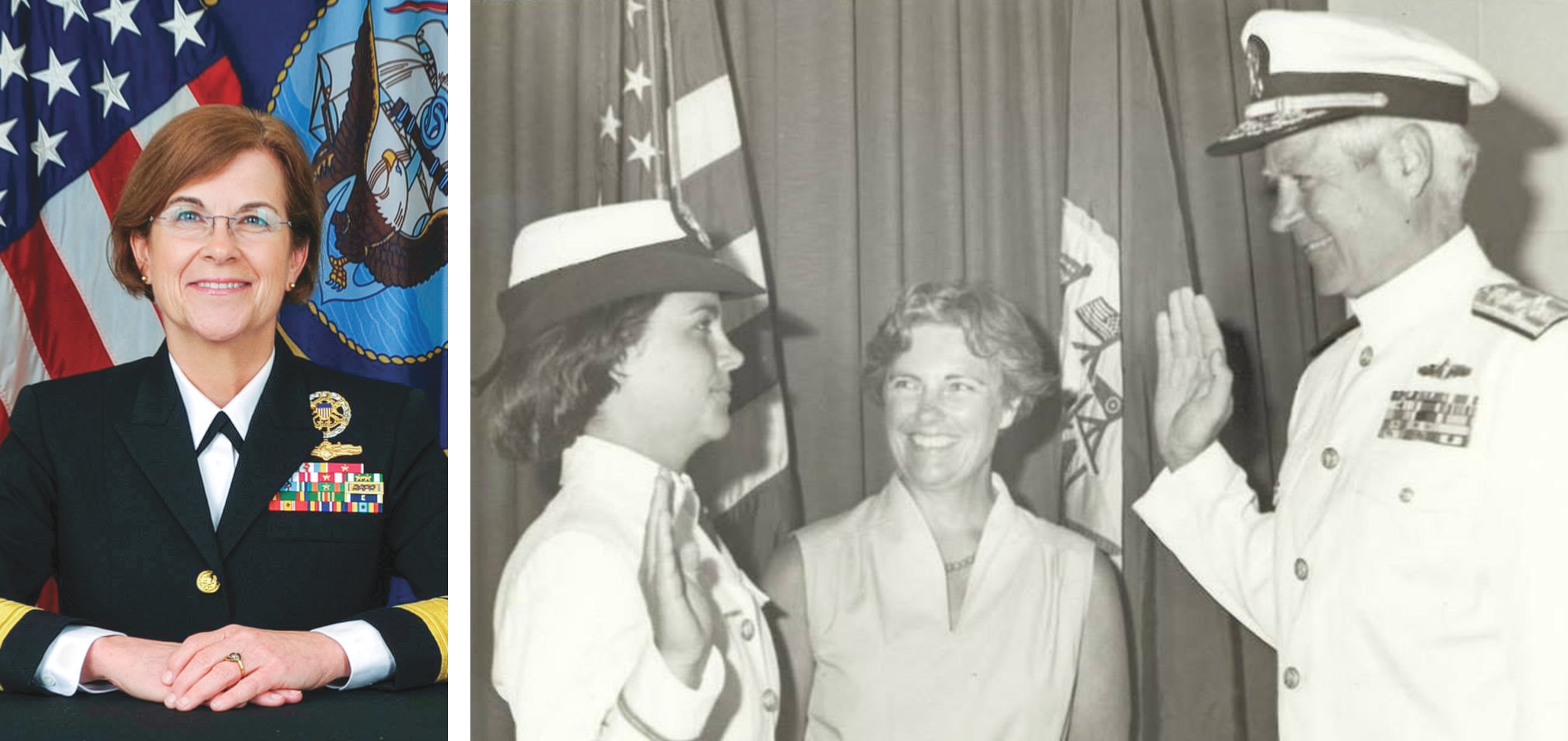
As a rear admiral in the U.S. Navy, Elizabeth Train ’78 led intelligence operations across the globe for the U.S. Indo-Pacific Command, the Joint Chiefs of Staff and the U.S. Navy. She provided intelligence support to warfighting operations, rescue and recovery efforts, and U.S. decisionmakers, most prominently for the Fukushima nuclear disaster in 2011.
Her impact as a military leader is rooted in both her academic background studying biology at William & Mary and a pivotal pre-college adventure hiking the entire Appalachian Trail. Together, those experiences reinforced her commitment to protecting natural resources and instilled the self-reliance and confidence that guided her leadership throughout her career.
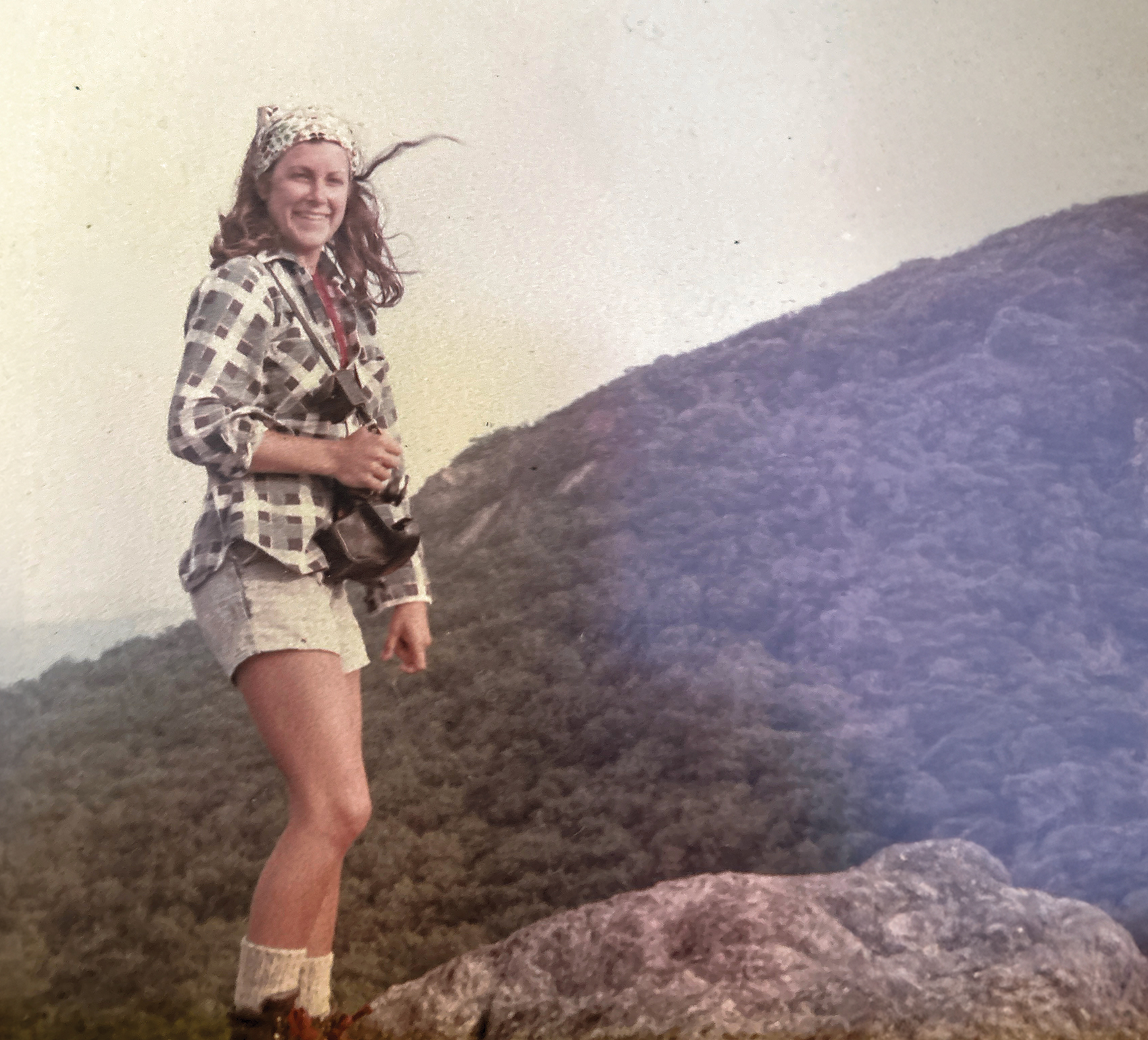
Train’s journey to the Navy was not the path that she had originally intended. After graduating from high school in Norfolk, Virginia, she took a gap year before college. Her father, a high-ranking officer in the Navy, suggested she take her savings and hike the Appalachian Trail. After selling a stamp collection she inherited from her grandfather, she made her way south to Georgia and began her 2,200-mile trek to Maine.
“It was transformational,” Train says. “I thought I was getting away into the wilderness, but what I found was this incredible community of people along the trail, whether it was hikers or those that lived nearby. Witnessing the incredible biodiversity of the Appalachian Mountains was incredibly exciting for me.”
Train spent her first year of college at the University of Colorado Boulder before transferring to William & Mary for her sophomore year. She chose W&M for the faculty-student connections and higher academic rigor. Inspired by her time on the trail, she majored in biology and found mentors in Gus Hall, professor emeritus of biology, and Mitchell Byrd, Chancellor Professor of Biology emeritus.
During her senior year, under Hall’s guidance, she completed an honors thesis. Her floristic botanical survey of the Dragon Run Swamp in Middlesex County, Virginia, helped spare the region from logging. She credits that experience with increasing her commitment to conservation.
After her graduation from W&M, she spent five years in Charlottesville, Virginia, using her biology knowledge while working as a leader for rock climbing, paddling and backpacking trips with Blue Ridge Mountain Sports. She made her way through the ranks of the company but felt that she could be doing more.
“I was surrounded by people who loved the outdoors, and while I was making good money and I loved the people I worked with, I didn’t feel that I was really doing enough for the world,” she says. “That converged with my father’s retirement. I knew that the Navy was just starting to put women into intelligence positions in deploying aviation squadrons, and I saw an opportunity for myself.”