From tech giant to board game startup to her own company, Catherine Fisher Carr ’91 made bold career moves
June 10, 2026
Story By
Isabella Dunn ’28
Photo Illustrations By
Molly Socks
From tech giant to board game startup to her own company, Catherine Fisher Carr ’91 made bold career moves
When faced with a crossroads between the security of the familiar and the pull of something new, Catherine Fisher Carr ’91 chose to take the leap.
After nearly six years as a multimedia editor at Microsoft, Carr left the stability of the large-scale tech corporation to join Cranium, a small board game startup. Walking away from the benefits of an established entity for an unproven venture that required building from the ground up was a risky decision, but one that excited her. The move shaped the trajectory of her career, eventually leading to the creation of her own company, Vitamin C Creative.
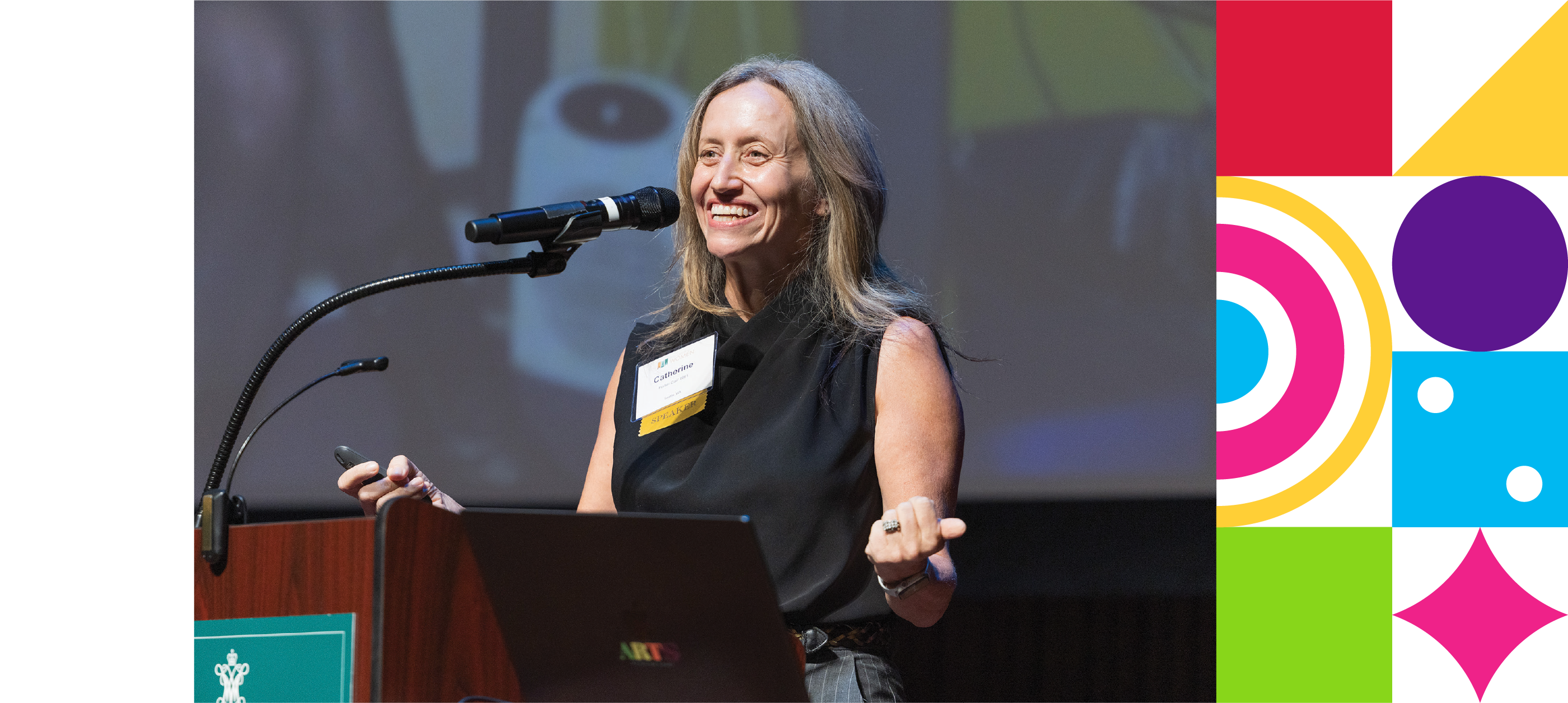
Through Vitamin C, she has worked with a wide range of organizations, from consumer brands to technology firms and nonprofits. Her work has even brought her back to her alma mater, where she collaborates with William & Mary’s Entrepreneurship Hub and participates as a guest speaker during events such as Professional Development Week and W&M Women’s Weekend.
Carr did not always have a clear vision of where she would end up. As a child, she imagined becoming an astronomer, a writer or a teacher, and she even co-created a school for neighborhood children at age 10.
When she arrived at William & Mary, that sense of exploration remained. Rather than pursuing a specific career path, she studied what aligned with her interests and strengths. She majored in English, drawn to what she described as a natural fit and her love of reading and writing, as well as an appreciation for the artistry of language.
“I love wordplay and how a precisely chosen word or phrase really captures the essence of what we’re trying to communicate,” Carr says.
After enrolling in an art history survey course with Barbara Watkinson, now a professor emerita of art history, she decided to explore the subject more deeply by adding it as a minor. She was drawn to the intersection of visual art and history, appreciating both context and beauty, and briefly considered a career in teaching the subject. She spent a summer semester studying literature with John Conlee, now an English professor emeritus, packed with other students into a small van, visiting historical sites in England, Scotland and Wales.
Conlee recalls their trips — visiting castles, cathedrals and ancient archaeological sites such as Stonehenge, Avebury and Tintagel, King Arthur’s legendary birthplace — and says he is not surprised that Carr found success in her professional life.
“She reflects the truism that William & Mary English majors don’t prepare for any one thing, they prepare for everything,” he says.
Through her humanities coursework, Carr says, she learned to decode symbols and themes and to analyze ideas from multiple perspectives. She now sees how those skills connect directly to her current professional work. As founder of Vitamin C Creative, she works to define and reshape companies’ brands and bring them to life through powerful storytelling, messaging and visuals.
Although her liberal arts education sharpened her ability to absorb and synthesize large amounts of information, it took some time for her to see how those skills would translate into a career. As graduation approached, she watched peers commit to law school or medical school while she continued weighing her options.
She applied to be a college admissions counselor and considered being a paralegal, but eventually landed a job as a multimedia editor at Microsoft.
Carr says she didn’t have “the typical Microsoft skill set,” since her background was in the humanities. She worked on Microsoft’s Encarta Encyclopedia, a digital reference tool, and Encarta Virtual Globe, which later served as a baseline for many digital maps.
After a few years, she got a call from Whit Alexander, who had left the Encarta team to found Cranium with another “ex-Microsoftie,” Richard Tait. They were looking for someone to lead their editorial team, and Carr’s manager, Nancy Dixon, had recommended Carr for the role, which led to her career-altering decision.
Microsoft was a well-established tech giant that offered stability, benefits and a clear career trajectory, which were all things Carr had worked hard to secure. Still, Cranium felt “intriguing,” she says, and she was excited at the prospect of being part of building a company and having a front-row seat to see where this quirky startup would go. Even in its early days, the company was gaining national attention after actor Julia Roberts mentioned on “The Oprah Winfrey Show” that it was her favorite game, creating buzz around the brand.
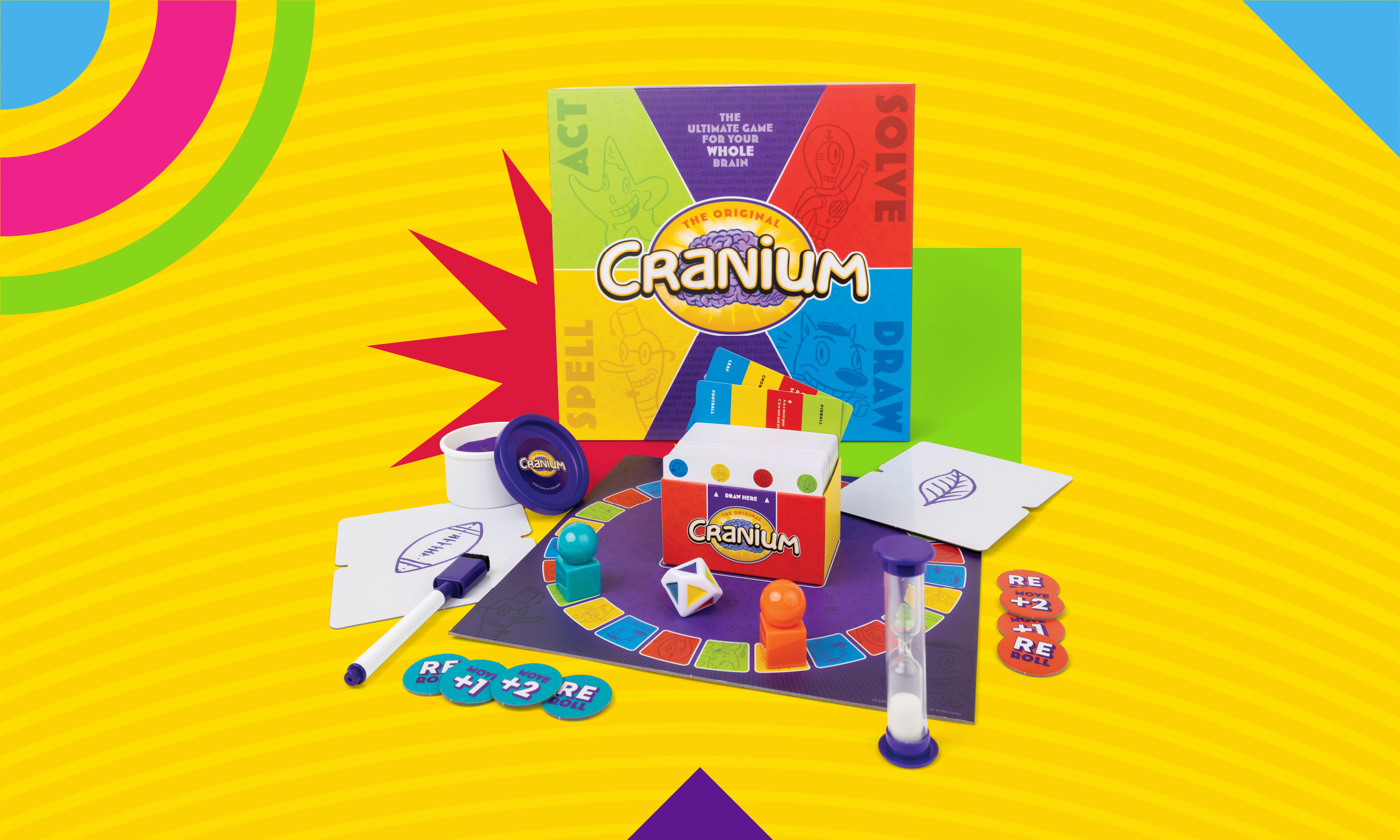
With the tagline “The game for your whole brain,” Cranium challenged players to compete in teams across a broad range of activities including trivia, charades, word games, drawing and sculpting. The company took innovative approaches to game design, using Howard Gardner’s theory of multiple intelligences as a framework; hiring artist Gary Baseman to create a distinctive box that challenged convention; and marketing, securing trailblazing distribution partnerships with Starbucks and Barnes & Noble.
Although joining a small startup was not an easy decision, the timing would prove fortunate: As Encarta faced the rise of Wikipedia, Carr had already stepped into a new opportunity with what would become a highly successful, award-winning game company, including awards from the Toy Industry Association as “Game of the Year” in 2001 and again in 2003.
Molly Kertzer, a former Microsoft teammate who met Carr when they were in their 20s, remembers Carr’s uncertainty about leaving the security of a global company. Kertzer, who became the 10th employee at Cranium, recalled that soon after Carr joined as the 11th or 12th hire, the hesitation disappeared.
“She never looked back,” Kertzer says.
Though Cranium was an unexpected choice for her, Carr says it was an opportunity she couldn’t pass up.
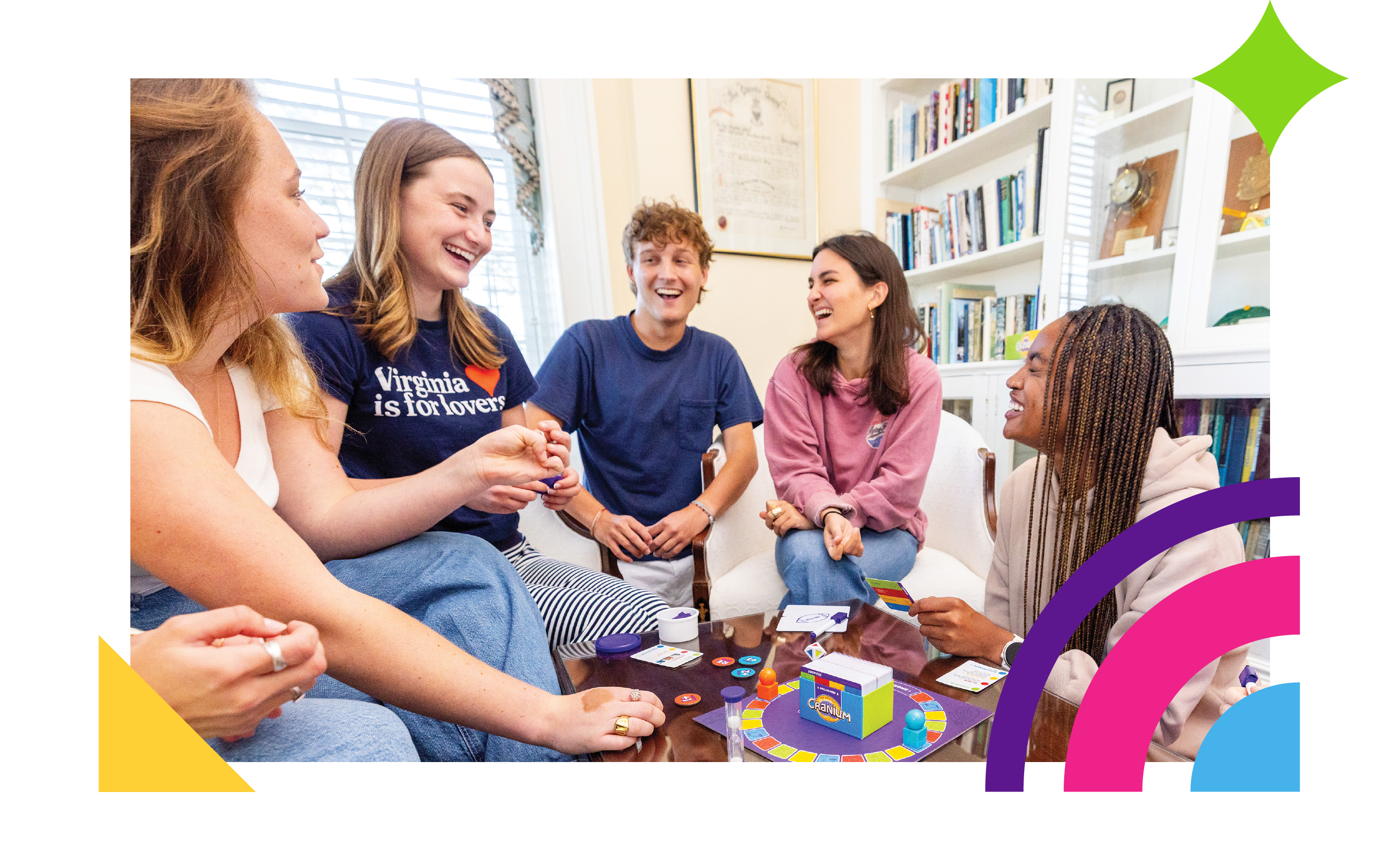
Cranium’s co-founder Tait emphasized a “consumer-centric” approach. From the company’s playful culture to its vibrant office — styled like an oversized game board — and deeply personal customer service, the brand “flowed through everything.” The team workshopped ideas to appeal to a range of audiences, from children to adults, and even created a “play-testing lab” where they could observe how people interacted with the games. That approach helped create a fun, energizing work environment that drew her in.
“It was a very special, tight-knit group of people and a place we all loved being. No one wanted to miss a day of work, because something fun was always happening,” Carr says.
She spent eight years at Cranium, a period marked by rapid growth. The company gained name recognition and launched new products in quick succession. It grew from a dozen employees to around 150.
As Cranium continued to evolve, its products ranged from adult board games to preschool games, as well as activity books, toys and video games. Its consumer base expanded to include a wide range of nationalities and cultures. The team had to “continually define what it meant to be a Cranium product,” Carr says.
This constant change made her role vital. Her job title was the “Keeper of the Flame,” charged with leading the content team and “keeping the soul of the brand intact” through a period of rapid growth. She accomplished this by documenting their unique brand formula to ensure consistency and continually evaluating the boundaries of the brand, leading conversations about what a Cranium product always, sometimes and never has.
She guided her team to operate on a global scale, selling in more than 20 countries, balancing efficiency with intentionality to ensure each market’s culture and sense of humor were represented thoughtfully.
“I learned an unbelievable amount in a short time,” Carr says.
Kertzer recalls a similar experience. For both women, Cranium nurtured their personal growth alongside the growth of the company itself.
She says Carr was a natural leader even in their early days at Microsoft, charismatic and impressive. But it was at Cranium that her friend and colleague “fully stepped into her power.” There, she built a thriving team, nurturing and supporting its members and sustaining a cohesive, joyful team culture even as the company expanded significantly.
Following the company’s acquisition by Hasbro for $77.5 million in 2008, the founders departed and Cranium was transformed into a much smaller team with a radically different feel. Carr remained for two years to assist with the transition and help integrate the brand into Hasbro.
Despite it being a bittersweet end to an era, Carr described the transition as an “important chapter” in her career. When she met the chief strategy officer for Hasbro’s agency, it clicked for her that the work she had been doing for years at Cranium opened up a new path centered on brand strategy.
“We had put so much heart, blood, sweat and tears into building the brand, and change is inevitable in these kinds of situations,” Carr says. Eventually, she felt it was time to move on.
After Hasbro, she entered what she calls the “messy middle,” a time of uncertainty about what would come next. After serving in a variety of roles at Cranium, from overseeing artists to leading publishing, she says she did not “fit in anybody’s box” and wasn’t sure she wanted to work for anyone else.
“It’s easy to look at where something ends up, and you don’t always realize the building that went into it,” Carr says.
Starting her own company, Vitamin C Creative, felt like another bold move. The brand strategy practice applies what she learned at Cranium to help other companies define and build their brands.
“We help brands get clear on their unique story, and then bring it to life everywhere with creativity, excellence and heart,” Carr says.
After founding her company, her professional path crossed with Kertzer’s once again. Kertzer was a client of Vitamin C Creative and now works closely with Carr as a senior brand strategist. She says Carr remains the same “creative brain” she was decades ago and is able to think expansively while staying deeply attentive to detail.
“She’s a beautiful writer,” Kertzer says. “She can take something that feels complicated and jargony and make it clear.”
That clarity, and the ability to uncover the heart of a brand’s story, has become a staple in Carr’s career.
Through Vitamin C, she has worked with a wide range of organizations, from consumer brands to nonprofits, portfolio companies and major technology firms. In each case, she said, the goal is to “bring the brand into focus and express it creatively.” The work allows her to return to her love of storytelling by asking founders, team members and customers to share what inspires them, what their vision is and what they love most about the company.
This method shaped the development of a powerful new brand platform, visual identity and updated website content for Blackbird Health, which focuses on mental health for children and young adults. This work resulted in a more cohesive brand and a powerful purpose statement: “To help as many kids and young adults as possible spread their wings and soar.” By 2024, Blackbird Health was able to raise $17 million in funding.
Through her brand work, Carr says, she continues to learn and syn-thesize as she did as a student to immerse herself in wide-ranging businesses from producing sparkling wine to precision diagnostics and video game analytics.
“I love it when a brand I’m working with enriches and overlaps with my lived experience,” she says.
Her education at William & Mary still informs that process, Carr says, as she looks for overarching themes and works to uncover what she calls the brand’s “real story,” which is often buried.
“It’s really about listening and paying close attention to the use of language and drawing on powerful language to build upon,” she says.
Carr looks for what she describes as “those little golden nuggets” that capture a company’s authenticity, something many organizations struggle to articulate, and then builds branding around those core truths, just as she did for Blackbird Health.
By synthesizing a company’s business goals and market context into a clear, simple brand platform, one that spells out why the organization exists and what makes it unique, she helps bring clarity to brands.
“The process is very energizing for the teams. They’re like, ‘Yes, this is what we’ve been trying to say!’” Carr says.
Vitamin C Creative also helped Icertis, a technology company specializing in contract management, elevate its brand and set itself apart in an increasingly crowded competitive landscape. This paved the way to a planned IPO by embracing a bold new position centering on contract intelligence. By shifting from “contract-centric” to “consumer-centric” language, Icertis could more clearly communicate the value of its offering to a wider audience.
Another brand Carr has helped reshape is William & Mary’s Entrepreneurship Hub.
After she gave a talk as part of the Hub’s Topic Talks series, Graham Henshaw, W&M’s assistant provost for entrepreneurship, said he was struck by her expertise and approached her afterward about helping articulate the organization’s brand.
Henshaw is pleased with the progress and the Hub’s team still meets with Carr to finalize and implement the brand. Through working with her, he has gotten to see the process in real time and says that a key element in her work is a “tolerance for ambiguity.”
“Building a brand for a company is like chiseling a sculpture. You have some idea of what you want it to look like and the form emerges along the way,” Henshaw says.
Working with Carr allows him to realize his vision through a deliberate creative process — one that gradually refines the broad ideas they began with into a clearer, more defined brand.
Over the past few months, that process of gradually chiseling away, refining ideas and bringing clarity from ambiguity is what he described as an example of “entrepreneurial thinking in action.”
Carr has also returned to William & Mary to share her career perspective as someone who followed a nontraditional path.
At W&M Women’s Weekend last fall, she delivered a “Mary Talk” titled “Playing the Game,” reflecting on her career at Cranium and highlighting the “messy middle” stage. She closed the talk with a quote from Cranium co-founder Whit Alexander: “If we’re not having fun, we’re not doing it right,” a philosophy that still influences her decisions and the advice she gives to those seeking more fulfillment at work.
In February, she participated in a Professional Development Week discussion called “The Price of Ambition,” in which she spoke about the risks she took in joining Cranium and the path that followed. What seemed like a risk at the time ended up opening the door to unexpected experiences that were both intellectually and creatively fulfilling.
Although she loves the work she does now, she misses her time at Cranium and the community feeling it fostered. As a “solopreneur,” she says the work can sometimes feel isolating. Reconnecting with William & Mary has helped her rediscover a sense of professional community, which led her to join the Society of 1918, an organization dedicated to increasing the engagement, leadership and philanthropy of women at the university.
“When I came to Women’s Weekend, it was very energizing, just seeing all these women who are at the top of their fields,” Carr says.
Living in Seattle, she also missed having a lot of William & Mary connections close by. The university remains a grounding place for her, she says, particularly because it is where she met her husband, Scot Carr ’91. For a period of time, she returned regularly when his band, The Flannel Animals, performed on campus.
If she could tell her younger self anything, she says it would be to “trust the process.”
“I have no regrets about those leaps that I’ve made,” Carr says. “I think if you adopt a mindset of continuous experimentation and learning and growth, you can take yourself to places that you might not have initially imagined.”